


Ingredient-led skincare was already visible in the category, Drunk Elephant observed it remained difficult to navigate. Ingredient lists were accessible, but interpretation required effort. Most consumers were not evaluating formulations in detail. Decisions were still influenced by brand familiarity, claims, or external validation. Ingredient awareness existed, but it did not consistently guide purchase behavior.
What we observe in this case is a shift in how ingredient information is structured rather than how it is created. The communication moves away from detailed explanation and towards selective framing. Instead of expanding consumer knowledge, the approach reduces complexity by focusing on a limited set of signals that can be applied repeatedly across products.
The positioning is built around elimination. Certain ingredients are framed as avoidable, and this becomes a primary filter in decision-making. This reduces the number of variables a consumer needs to process. The evaluation does not begin with comparison. It begins with exclusion. Products either align with the defined framework or fall outside it.
We also observe the use of terms such as “biocompatibility” functioning more as positioning cues than technical constructs. These terms are not expanded into detailed scientific explanation. They operate as simplified signals that imply compatibility and safety. For the consumer, this reduces the need to interpret formulation-level information.
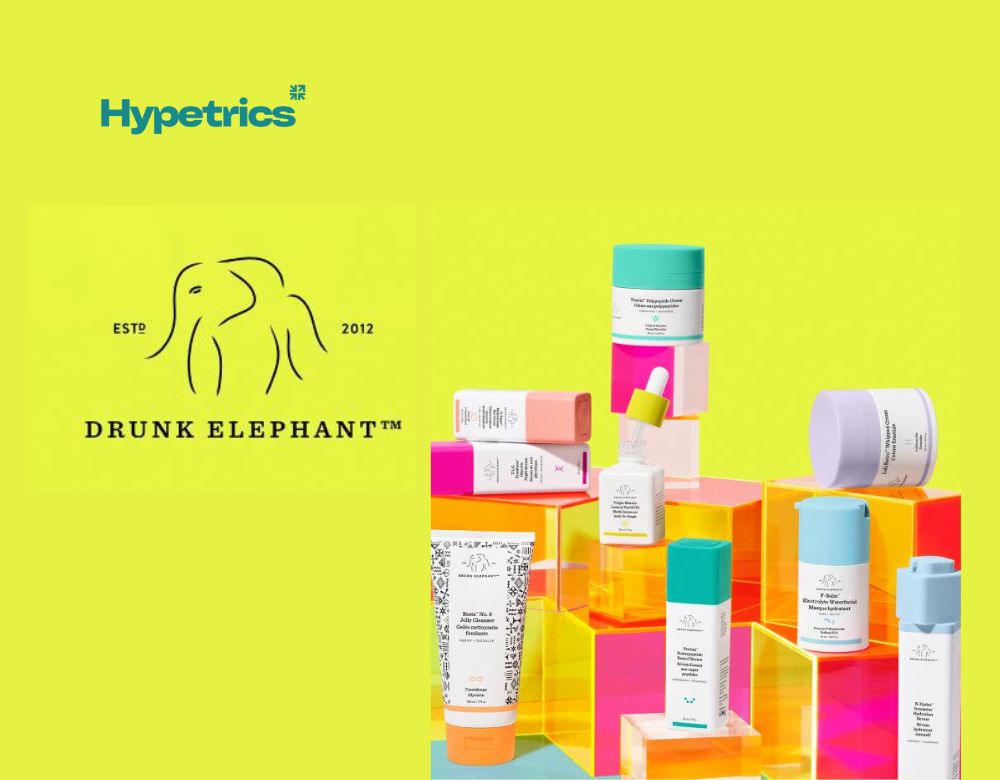
The visual system supports this structure. Packaging uses minimal technical language and relies on distinct color coding and simplified naming. This reduces perceived complexity at the point of interaction. The product does not attempt to explain itself in depth. It signals clarity through presentation.
From a market perspective, this aligns with how the brand scaled in its early phase. Before its acquisition by Shiseido in 2019, the brand had reached approximately $100–120 million in annual sales. The acquisition value of $845 million indicates that this positioning was being recognized at a category level, not just at a product level.
Post-acquisition performance shows a different pattern. Growth appears more constrained, with estimated annual sales remaining in a similar range in recent years. In certain periods, sharper declines have also been observed across select markets. This suggests that while simplified decision frameworks can support early adoption, they may not sustain momentum without broader evolution in positioning or distribution.
Consumer behavior during this phase reflects a shift towards structured shortcuts. Ingredient awareness increases, but not in depth. Consumers rely on signals such as “free-from” positioning or defined ingredient lists. The decision-making process becomes faster, but also more dependent on brand-defined frameworks rather than independent evaluation.
Distribution and pricing further reinforce this structure. Placement in premium environments maintains perception consistency, while pricing aligns with the idea of formulation clarity rather than detailed performance differentiation. Consumers are not engaging deeply with efficacy claims. They are responding to structured signals around safety and simplicity.
What emerges is a broader category pattern. Increased information does not necessarily improve decision-making. In many cases, it increases friction. Simplification, when structured clearly, reduces that friction and enables faster adoption. However, it also shifts control of interpretation towards the brand.