


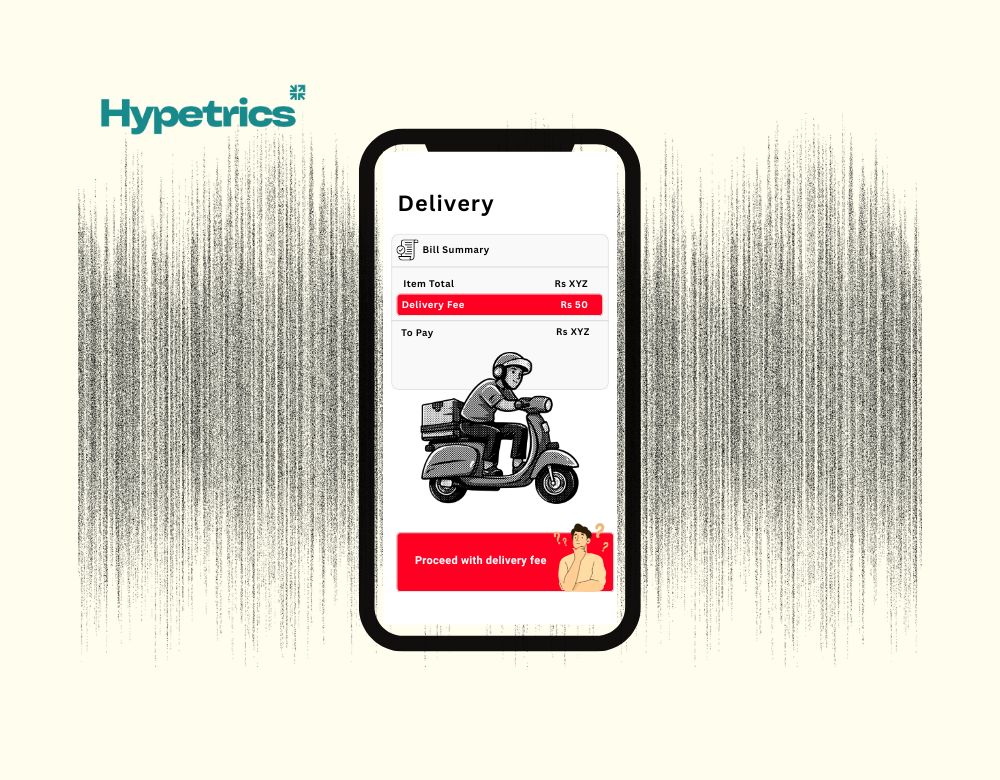
Urban consumption in India is changing rapidly. Consumers are spending more on premium experiences, convenience-driven services, and lifestyle categories than ever before. Luxury cafés are expanding across metro cities, beauty and wellness services are seeing higher ticket sizes, and premium dining continues to attract demand despite inflationary pressure. At the same time, a small delivery fee at checkout still creates visible resistance. A ₹40 or ₹50 charge often triggers hesitation, coupon searches, cart abandonment, or frustration, even among consumers who are comfortable spending thousands on experiences within the same ecosystem.
This contradiction reflects a deeper behavioural pattern inside India’s digital consumer economy. The issue is not the amount itself. It is the way the cost is mentally processed. Premium experiences are interpreted as emotionally rewarding spending, while delivery fees are interpreted as operational charges without visible value creation. One feels like consumption. The other feels like an added burden.
This distinction is becoming increasingly important across ecommerce, quick commerce, food delivery, and service marketplaces. Platforms are no longer competing only on pricing or speed. They are competing on how costs are emotionally framed during the decision journey.
Consumers rarely question the premium attached to ambience, aesthetics, packaging, or exclusivity. A ₹300 coffee inside a premium café environment feels justified because the experience extends beyond the product itself. The same consumer may still hesitate before paying ₹50 for delivery because the charge appears separately and does not feel emotionally rewarding. Delivery operates in the background. The infrastructure enabling convenience becomes visible only when pricing exposes it.
This behaviour has been shaped over years by platform-led convenience models. Food delivery apps, ecommerce companies, and quick commerce platforms aggressively normalised free delivery through discounts, memberships, and subsidy-driven expansion. Consumers were trained to focus on product price while delivery remained hidden, absorbed, or waived under specific conditions. Over time, convenience stopped feeling like a paid service. It became an expected layer within the transaction.
Once expectations stabilize, behavioural resistance increases sharply when hidden costs become visible again. This explains why a ₹50 delivery fee can create more emotional friction than a ₹200 increase inside the product price itself. Consumers are not always reacting to the value of the fee. They are reacting to its visibility.
This is why pricing structure matters more than pricing amount in many digital categories. A higher product price with “free delivery” often performs better than a lower product price with added delivery charges. The total payment may remain nearly identical, but the psychological experience changes completely. Consumers prefer integrated pricing because it preserves the feeling of seamless value exchange.
The same logic is visible in subscription-led ecosystems. Platforms increasingly encourage users to purchase monthly memberships that unlock free delivery benefits. Economically, consumers may still be paying for logistics indirectly. Behaviourally, however, the payment feels different. A one-time subscription creates lower friction than repeated visible operational fees during each transaction.
This pattern is now shaping the business models of food delivery and quick commerce companies across India. Platforms are restructuring unit economics around perceived fee acceptance rather than only operational efficiency. Free delivery thresholds, bundled benefits, loyalty systems, and limited-time offers all serve the same purpose: reducing emotional resistance at checkout.
Urgency also changes fee sensitivity significantly. Consumers tolerate delivery charges more easily when the purchase solves an immediate need. Late-night food orders, urgent medicine purchases, forgotten grocery items, or emergency convenience purchases typically face lower resistance. In these situations, the delivery fee becomes part of the urgency resolution itself.
The same fee appears more irritating in low-urgency categories. Consumers buying fashion products, lifestyle items, or non-essential goods are more likely to compare prices, delay decisions, or abandon carts when operational charges become visible. The fee is not evaluated independently. It is evaluated against perceived emotional necessity.
Another important behavioural layer comes from ownership perception during checkout. Consumers psychologically commit to the purchase once the product is selected and added to cart. Additional charges introduced later in the flow interrupt this commitment. The checkout experience shifts from “buying something desirable” to “paying more than expected.” Even small operational charges create disproportionate friction at this stage because they alter perceived fairness after commitment has already started.
This explains why brands increasingly integrate operational costs into overall pricing structures instead of displaying them separately. Invisible pricing often creates smoother decision-making than transparent operational breakdowns. While transparency is usually considered positive from a business perspective, consumer psychology does not always reward visible cost separation.
The rise of premium consumption in India makes this contrast even stronger. Spending on wellness, beauty services, luxury dining, premium cafés, boutique fitness, and aesthetic experiences continues to rise among urban consumers. These purchases deliver emotional return beyond functionality. Consumers associate them with identity, self-care, aspiration, or social signalling.
Delivery fees fail to enter this emotional framework. They remain infrastructural. Consumers do not feel they are receiving something memorable or identity-enhancing from the charge itself. The operational nature of the fee makes it vulnerable to scrutiny.
This behaviour reflects a broader transition in India’s consumption economy. Emotional spending is expanding, while utility-linked charges are facing tighter evaluation. Consumers are becoming increasingly willing to spend for comfort, speed, aesthetics, and experiences, but increasingly resistant toward visible infrastructural costs supporting those experiences.
The implications extend far beyond delivery platforms. Similar resistance patterns are now visible around:
- Convenience fees
- Packaging charges
- Platform commissions
- Service fees
- Handling charges
Consumers increasingly expect seamless digital convenience while resisting direct visibility of operational economics. This creates pressure on platforms to redesign pricing architecture continuously.
At the same time, the infrastructure enabling convenience is becoming more expensive. Quick commerce, rapid logistics, dark stores, and last-mile delivery systems require heavy operational investment. Businesses are balancing two competing realities: consumers demand faster convenience, but show resistance toward directly funding the infrastructure behind it.
This tension is shaping the next phase of India’s platform economy. The challenge is no longer only operational scale. It is behavioural acceptance of operational cost visibility.
The rise of subscription ecosystems reflects one solution to this problem. Membership programs reduce repeated pricing friction by converting variable operational charges into fixed psychological commitments. Consumers feel more comfortable paying once for continued access than repeatedly paying smaller visible charges during every transaction.
The behaviour also highlights how modern spending decisions are increasingly categorised emotionally rather than rationally. Consumers are not simply evaluating affordability. They are evaluating how the spending feels.
A ₹5,000 premium experience feels emotionally justified because the consumer perceives visible value, identity reinforcement, and experiential return. A ₹50 delivery fee feels operationally exposed because it lacks emotional framing, despite enabling the convenience itself.
This distinction explains why delivery fees continue to trigger disproportionate reactions across India’s digital economy. The future of platform pricing may depend less on reducing operational cost and more on redesigning how those costs are psychologically experienced during consumption.