


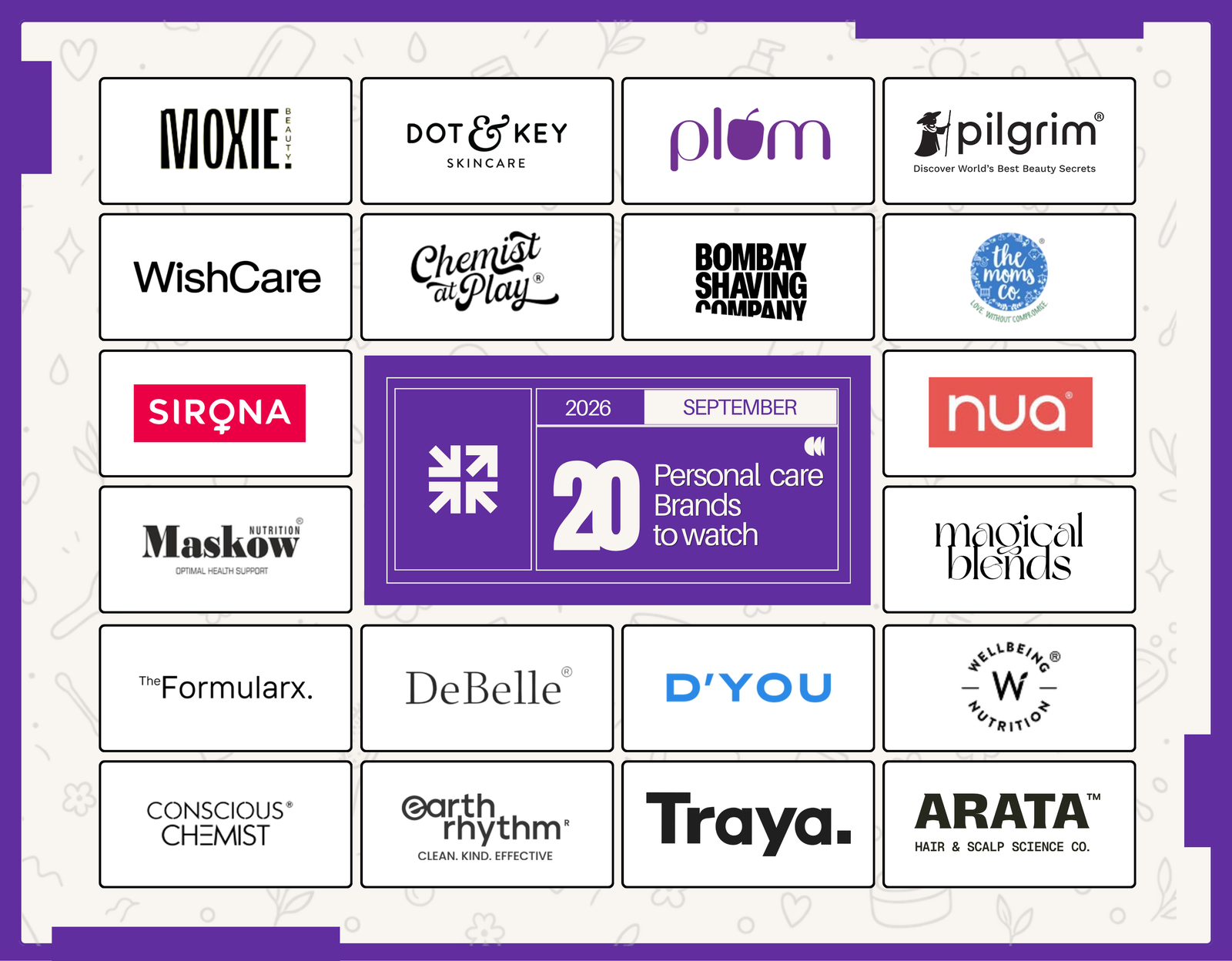
India’s personal care market is becoming more specialised. Consumers are moving beyond conventional categories and looking for products built around specific needs, routines and lifestyles. From skincare and haircare to grooming, wellness, intimate care and beauty, a new generation of brands is creating sharper propositions across the category. 20 Personal Care Brands to Watch tracks the brands building distinctive positions within this evolving market.
01. Moxie Beauty

Category: Haircare
Market Proposition:
Moxie Beauty is building a haircare proposition around the idea that modern hair routines need to account for different hair types, textures and everyday styling needs. Rather than treating haircare as a one-size-fits-all category, the brand focuses on products designed around specific hair concerns and routines.
Its portfolio spans cleansing, conditioning, styling and treatment, allowing consumers to build a more complete haircare regimen within the same brand ecosystem. This creates an opportunity to move the consumer relationship beyond individual products and towards recurring haircare routines.
The proposition is particularly relevant to consumers navigating changing hair behaviour caused by heat styling, colouring, environmental exposure and regular grooming. By combining treatment-led products with styling solutions, Moxie operates across both hair health and hair expression.
The brand also participates in a broader shift within Indian beauty, where consumers are becoming more familiar with specialised haircare rather than relying only on traditional shampoos and conditioners. Hair texture, curl patterns, frizz, damage and styling requirements are increasingly becoming distinct purchase considerations.
Moxie’s opportunity lies in making specialised haircare more accessible and routine-driven. A focused portfolio can help consumers identify products according to their specific hair requirements, while encouraging repeat usage across multiple stages of the routine.
This positions Moxie within the evolving Indian haircare market where consumers are moving from basic cleansing towards personalised, concern-led and performance-oriented routines. Its combination of care and styling gives the brand room to participate across the wider haircare journey rather than being confined to a single product category.
02. Dot & Key

Category: Skincare + Bath & Body
Market Proposition:
Dot & Key combines active skincare with an accessible, sensorial beauty experience. Its proposition addresses familiar consumer needs including hydration, acne care, pigmentation, skin repair and sun protection.
The brand operates in an important middle space. It is more formulation-focused than conventional beauty products, while remaining approachable for consumers who may not want a highly clinical skincare experience.
This makes its proposition relevant to the expansion of everyday skincare routines in India.
A major opportunity lies in routine expansion. Consumers increasingly use multiple products across cleansing, treatment, moisturising and sun protection. A brand capable of participating across several steps can increase both purchase frequency and category relevance.
The same logic extends into body care. As skincare principles move beyond the face, consumers are beginning to look for more specialised body products addressing hydration, texture, pigmentation and other concerns.
Dot & Key can therefore participate in the broader convergence of beauty, skincare and body care.
Its market proposition is ultimately about making functional personal care easier to understand and more enjoyable to use. The challenge is maintaining distinctiveness as active ingredients, colourful packaging and sensorial formats become increasingly common across the category.
03. Plum

Category: Skincare | Haircare | Bath & Body
Market Proposition:
Plum is building a multi-category personal-care ecosystem rather than depending on one specialised consumer problem.
Its portfolio spans skincare, haircare, body care and beauty, giving it access to multiple everyday routines. This creates an important structural advantage: consumers can enter through one category and gradually discover others without leaving the brand ecosystem.
The proposition combines functional personal care with a more expressive and accessible beauty identity. This gives Plum room to appeal to consumers who evaluate products on both performance and overall brand experience.
The broader opportunity is the movement from single-product purchasing to routine-based consumption. As consumers build more elaborate personal-care routines, brands with multiple relevant categories can capture a larger share of the consumer’s overall basket.
Plum also operates across categories with different purchase frequencies. Some products are replenished frequently, while others are more occasional purchases. This creates opportunities to build recurring engagement across the portfolio.
The key market question is how effectively a broad portfolio can maintain a coherent identity.
Plum’s proposition is strongest when its different categories feel connected by a consistent philosophy rather than appearing as unrelated products under one name.
The long-term opportunity is to become an everyday personal-care platform with relevance across multiple consumer routines.
04. Pilgrim

Category: Skincare | Haircare
Market Proposition:
Pilgrim has built a personal-care proposition around global beauty influences, ingredient discovery and accessible routines.
Rather than concentrating on one narrow consumer problem, the brand uses ingredients, beauty traditions and product formats to create a broader discovery-led experience.
This is relevant to a market where consumers are increasingly exposed to international beauty trends through digital platforms. Consumers are discovering ingredients, rituals and product formats from different markets and looking for accessible ways to incorporate them into their own routines.
Pilgrim’s opportunity is to translate that interest into locally accessible personal care.
Its presence across skincare and haircare also creates opportunities for cross-category movement. A consumer entering through one concern can discover adjacent products within the same brand ecosystem.
The proposition is therefore built around both functional products and consumer curiosity.
However, discovery alone is not enough to create a durable personal-care business. Repeat purchase ultimately depends on product performance, routine relevance and trust.
The larger market opportunity for Pilgrim lies in converting the interest generated by global beauty trends into repeatable Indian consumer routines.
If it can continue creating distinctive products while maintaining a clear brand identity, it can occupy an interesting space between mainstream beauty and specialised ingredient-led personal care.
05. WishCare

Category: Haircare | Skincare | Bath & Body
Market Proposition:
WishCare is building a broad personal-care portfolio around high-intent consumer concerns across hair, skin and body care.
Its proposition is closely aligned with the way consumers increasingly discover products. Rather than starting with a brand, many consumers begin with a concern such as hair fall, pigmentation, skin hydration or body care and then search for a solution.
This creates opportunities for brands with clearly defined products across multiple concerns.
WishCare’s breadth allows it to participate in several recurring personal-care routines. Haircare can create frequent consumption, while skincare and body care provide additional opportunities for basket expansion.
The brand also benefits from the growing convergence between facial skincare and body care. Consumers are increasingly applying concepts such as exfoliation, hydration and targeted treatment to the rest of the body.
That expands the addressable market beyond traditional face-focused skincare.
The strategic opportunity is therefore breadth combined with problem-specific relevance.
The challenge is ensuring that a broad portfolio does not dilute brand recall. Consumers need clear associations with particular categories or problems.
Its longer-term market proposition will depend on turning product discovery into repeat routines and establishing stronger category ownership across hair, skin and body care.
06. Chemist at Play
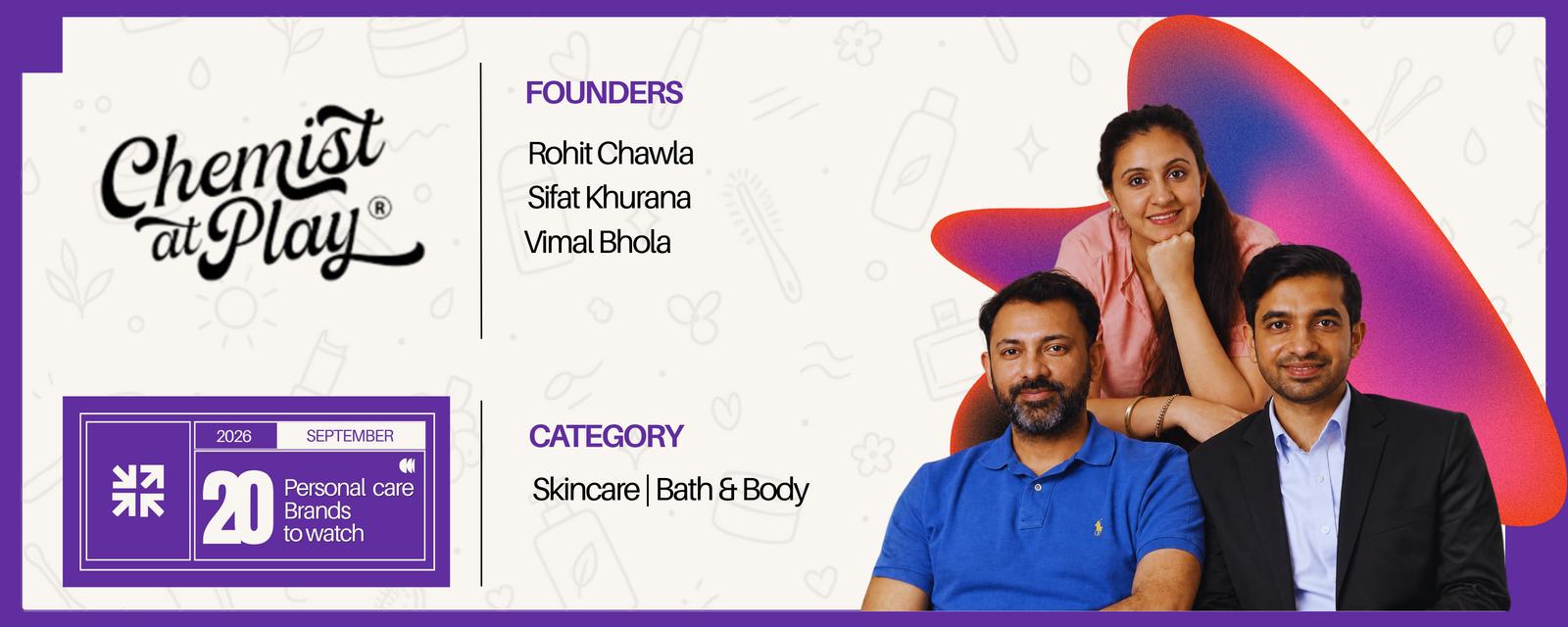
Category: Bath & Body | Skincare
Market Proposition:
Chemist at Play is helping move body care from a basic hygiene category towards more specialised, ingredient-led personal care.
Traditional body care has largely revolved around cleansing, moisturising and fragrance. The emerging opportunity is more concern-specific: body acne, pigmentation, exfoliation, dryness, texture and other skin needs.
Chemist at Play operates within this transition.
Its proposition applies familiar skincare concepts such as active ingredients and targeted formulations to body care. This makes the category more sophisticated while giving consumers more reasons to spend across a wider range of products.
The larger market opportunity is the skincare-ification of body care.
Consumers who already invest in facial skincare can increasingly be encouraged to treat the rest of the body with similar attention. This creates new routines and potentially higher product frequency.
The brand can therefore benefit from a category that is expanding not only through new consumers but also through increased consumption among existing skincare users.
Its challenge is maintaining a clear distinction as more personal-care companies move into specialised body care.
The strongest opportunity lies in establishing body care as a serious personal-care category rather than simply an extension of shower and hygiene products.
07. Bombay Shaving Company
Category: Grooming | Skincare
Market Proposition:
Bombay Shaving Company is expanding men’s grooming beyond the traditional razor-and-shaving category.
The underlying market shift is straightforward. Men’s personal care is increasingly moving from basic grooming towards skincare, beard care, body care and broader daily maintenance.
This creates a significantly larger opportunity than shaving alone.
The brand’s proposition gives men an accessible entry point into personal care. Consumers who may initially purchase shaving products can gradually move into face wash, moisturisers, beard products and other grooming categories.
That creates an ecosystem effect.
The opportunity is particularly relevant because men’s grooming remains less developed than several women’s personal-care categories. As cultural attitudes towards male skincare and grooming continue to change, brands can create entirely new routines rather than simply competing for existing purchases.
Bombay Shaving Company’s market proposition therefore sits around normalising and expanding everyday men’s personal care.
Its challenge is maintaining differentiation as mainstream skincare companies increasingly introduce products specifically for men.
The stronger long-term opportunity is to own the broader men’s grooming routine rather than remain associated primarily with shaving.
08. The Moms Co.
Category: Baby/Kids Care + Personal Care
Market Proposition:
The Moms Co. operates at the intersection of baby care, maternal needs and ingredient-conscious personal care.
Baby and mother care are categories where consumers tend to pay close attention to ingredients, safety and product suitability. This creates a different purchase dynamic from conventional beauty, where packaging and trends can play a larger role.
The brand’s proposition is built around addressing specific stages of the parent and child journey.
That creates opportunities beyond individual products. A consumer can potentially enter during pregnancy, move into postpartum care and then continue into baby skincare and hygiene.
This creates a longer potential consumer lifecycle than many conventional personal-care categories.
The broader market opportunity lies in the premiumisation of family personal care. Parents are increasingly looking for specialised products rather than treating baby and maternal care as extensions of general hygiene.
This gives brands room to build deeper category expertise.
The challenge is maintaining trust as the portfolio expands. In baby and maternal care, product credibility and perceived safety are central to the purchase decision.
The larger proposition is therefore built around becoming a trusted personal-care ecosystem for families during one of the highest-intent periods of consumption.
09. Sirona
Category: Intimate Care & Personal Care Wellness
Market Proposition:
Sirona is positioned around solving everyday intimate and personal-care problems that have traditionally received limited product attention.
Its proposition extends beyond conventional feminine hygiene into areas such as intimate care, period management and everyday wellness.
This creates a market opportunity driven by category creation rather than simply category competition.
Many intimate-care needs have historically been underserved by mainstream personal-care companies. Brands that address these needs directly can create new purchase occasions and establish entirely new consumer routines.
Sirona’s opportunity lies in making these products more visible, accessible and normalised within everyday personal care.
The category also has a strong recurring-consumption characteristic. Many products are replenishment-led, creating opportunities for repeat purchasing and broader basket development.
The larger proposition is therefore about expanding the definition of personal care.
Instead of limiting the category to skin, hair and beauty, intimate wellness becomes part of the everyday consumer-care ecosystem.
The challenge is maintaining trust and education as the category expands. Consumers need to understand not only what the product does but when and why it belongs in their routine.
That makes Sirona an interesting example of a brand participating in category expansion rather than simply fighting for share within an established segment.
10. Nua

Category: Intimate Care + Personal Care Wellness
Market Proposition:
Nua is building a consumer proposition around women’s intimate care, period management and everyday wellness needs.
The brand operates in a category where consumer behaviour is changing from basic hygiene purchasing towards more specialised and solution-oriented products.
Its opportunity lies in addressing a wider range of women’s needs through products designed around specific situations and routines.
This creates a different relationship with the consumer from conventional beauty. Personal relevance and recurring usage are central to the category.
Nua can therefore build around routine-based consumption, where individual products serve different stages of the menstrual and personal-care cycle.
The broader market opportunity is the expansion of women’s wellness into everyday consumer products. As conversations around intimate health become more visible, product categories that were previously treated as purely functional can become more specialised.
The brand’s challenge is maintaining clarity across a portfolio that can easily become broad. Strong category associations can help consumers understand what the brand represents.
The long-term proposition is larger than period care alone. It is about building an ecosystem around women’s everyday personal-care and wellness needs.
This places Nua at the intersection of personal hygiene, intimate care and consumer wellness, three categories that are increasingly converging.
11. Maskow Nutrition

Category: Health & Wellness
Market Proposition:
Maskow Nutrition is building a daily wellness proposition around a simple consumer problem: maintaining nutritional routines is difficult when modern lifestyles create dietary gaps and traditional supplements feel inconvenient. The brand addresses this through palatable, functional nutraceuticals, with gummies positioned as an easier format for everyday supplementation.
Founded by Pratima Diwan, with medical guidance from Dr. Anoop Kumar Diwan, the brand combines food-engineering expertise with clinical experience. Its product portfolio focuses on specific, everyday wellness needs rather than a single health category.
The range includes Sharp Eye, formulated with lutein, zeaxanthin and vitamin A; Sleep Support with melatonin; Hair, Skin & Nails with biotin and zinc; and daily wellness products covering apple cider vinegar, vitamin D and immunity support with vitamin C. This gives Maskow a portfolio spanning screen-related wellness, sleep, beauty nutrition and daily supplementation.
Its plant-based, pectin-based and vegan-friendly gummy format also responds to the growing preference for alternatives to conventional tablets and capsules. The proposition is therefore built around making supplementation more accessible and habit-friendly.
Quality infrastructure forms another part of the brand’s proposition. Maskow products are manufactured at ISO 22000 and GMP-certified facilities and operate under FSSAI compliance, creating a structured quality framework around formulation and production.
The brand has established a D2C presence while extending distribution through quick commerce, e-commerce marketplaces and more than 300 retail pharmacy outlets across Delhi NCR. This multi-channel approach allows Maskow to participate in both planned supplement purchases and increasingly convenient, on-demand wellness consumption.
Its larger opportunity lies in making daily nutrition a consumer habit rather than a corrective health decision. By combining targeted formulations with convenient formats and accessible distribution, Maskow is positioning itself at the intersection of nutrition, convenience and everyday wellness.
12. Magical Blends

Category: Skincare
Market Proposition:
Magical Blends is building a system-led skincare proposition around a simple insight: skin changes with changing internal and external conditions, so skincare should adapt accordingly.
Instead of asking consumers to continuously switch between products for different concerns, the brand brings cleansers, active serums and moisturisers into curated skincare regimes designed around specific problems such as acne, pigmentation, sun damage, dullness, dryness and fine lines.
Its portfolio currently includes 3 face washes and scrubs, 6 plant-based active serums and 2 moisturisers, allowing consumers to use products individually or as part of a recommended combination.
The proposition is built around efficacy with safety, with products positioned as plant-based, vegan, dermatologically tested and free from artificial fragrances and colours. This creates a proposition for consumers looking beyond individual trend-led products and seeking a more structured approach to skincare.
The brand’s larger opportunity lies in turning skincare from a collection of products into a complete problem-solving system. For consumers frustrated by repeatedly switching brands, a regime-based approach can create greater continuity and potentially stronger product relationships.
With a founder bringing two decades of consumer-brand and personal-care experience, Magical Blends is developing towards a premium skincare position focused on discerning consumers seeking simpler, structured and effective routines.
13. The Formularx

Category: Skincare
Market Proposition:
The Formularx is building a skincare proposition around targeted formulations and specific skin concerns. Its approach reflects the growing shift from generic skincare routines towards products selected according to individual skin needs, concerns and active ingredients.
The brand operates across everyday concerns such as hydration, acne, pigmentation, sensitivity and skin barrier support, creating a portfolio that can fit into different stages of a consumer’s skincare routine. This concern-led approach allows The Formularx to participate in a market where consumers are becoming more familiar with ingredients and increasingly evaluating products based on what they are formulated to address.
Its positioning also reflects the changing role of skincare among younger Indian consumers. Skincare is increasingly becoming a routine category rather than an occasional beauty purchase, with consumers experimenting with serums, moisturisers, cleansers and treatment products based on specific requirements.
The opportunity for The Formularx lies in translating formulation-led skincare into accessible everyday routines. Rather than competing only through individual hero products, the brand can build a broader relationship around multiple concerns and recurring skincare needs.
This places The Formularx within the wider evolution of Indian skincare, where ingredient awareness, targeted solutions and routine-based consumption are becoming increasingly important. Its focused formulation approach gives the brand room to develop across skincare concerns while building a more specialised position within the broader personal care market.
14.DeBelle

Category: Makeup & Beauty
Market Proposition:
DeBelle is building a conscious beauty proposition around colour, care and everyday self-expression. Launched in 2016, the brand began with nail beauty and has expanded into a broader portfolio spanning nail lacquers, nail care, lipsticks and artisanal soy wax candles.
Its differentiation is rooted in combining beauty performance with formulation-conscious choices. The brand’s 21-free nail formulations are designed to remove a range of harmful chemicals while maintaining long-lasting, salon-quality results. Its debut collection was developed with a France-based formulation house and incorporated antioxidant-rich seaweed extract, connecting colour cosmetics with nail care.
The portfolio also addresses changing consumer needs around beauty maintenance. Its nail care products target damage associated with gels and acrylics, while its lipsticks incorporate hyaluronic acid. This creates a broader proposition where makeup is positioned alongside care rather than as a purely cosmetic purchase.
DeBelle also places emphasis on products designed for Indian consumers, including formulations suited to Indian skin tones and evolving lifestyles. Its manufacturing capabilities and quality standards support a positioning built around consistency and product performance.
The larger opportunity for DeBelle lies in the convergence of colour cosmetics and conscious beauty. Consumers are increasingly evaluating what beauty products contain, how they perform and how they affect skin or nails over continued use. DeBelle’s portfolio allows it to participate across these considerations rather than competing only on colour or aesthetics.
With nail beauty as its original category and makeup expanding its addressable market, DeBelle is developing a beauty proposition centred on self-expression without separating it from care.
15. d’you
Category: Skincare
Market Proposition:
d’you is building a more premium skincare proposition around simplified routines, formulation-led products and consistent skin health. The brand operates within a segment where consumers are increasingly looking beyond basic moisturisation and cleansing towards products designed around long-term skin maintenance.
A key part of the proposition is reducing complexity in skincare. Instead of encouraging consumers to build routines around a large number of products, d’you focuses on fewer, more considered formulations. This approach addresses a growing consumer tension: skincare routines are becoming increasingly sophisticated, while consumers are also looking for simplicity and clarity in what they use.
The brand’s positioning places greater emphasis on formulation and skin function rather than purely cosmetic outcomes. This creates relevance among consumers who are becoming more informed about ingredients, skin barriers, hydration and everyday skin health.
d’you also occupies an interesting space between traditional beauty and emerging skincare. Its proposition is built for consumers who are willing to spend more on products that fit a considered routine, creating opportunities for stronger value per consumer rather than relying solely on high-volume consumption.
The larger opportunity lies in the premiumisation and simplification of skincare. As Indian consumers become more knowledgeable about formulations, there is room for brands that can combine sophisticated product development with easier routines.
d’you therefore represents a different direction within India’s evolving skincare market: fewer products, stronger formulation narratives and a greater focus on maintaining skin health as part of everyday personal care.
16. Wellbeing Nutrition

Category: Personal Care Wellness
Market Proposition:
Wellbeing Nutrition operates at the intersection of nutrition, wellness and everyday consumer health routines.
Its proposition reflects a broader shift in personal care: consumers increasingly view beauty and wellness as connected rather than separate categories.
This creates opportunities around products that support everyday wellbeing, nutrition and lifestyle routines.
The key difference from conventional personal care is the point of consumption. Instead of applying a product externally, wellness products become part of the consumer’s internal routine.
This opens a much wider definition of the personal-care market.
The opportunity is particularly relevant to consumers who increasingly connect appearance, energy, nutrition, sleep, fitness and general wellbeing.
Wellbeing Nutrition can therefore participate in the growing convergence of beauty and wellness.
The category also creates potential for recurring consumption because many wellness products are designed around regular routines rather than occasional purchases.
The challenge is establishing clear consumer understanding. Wellness is a broad category, and consumers need a clear reason to choose one product over another.
The larger market proposition is the development of an everyday wellness ecosystem where personal care extends beyond skincare and grooming into products designed around the broader consumer lifestyle.
17. Conscious Chemist
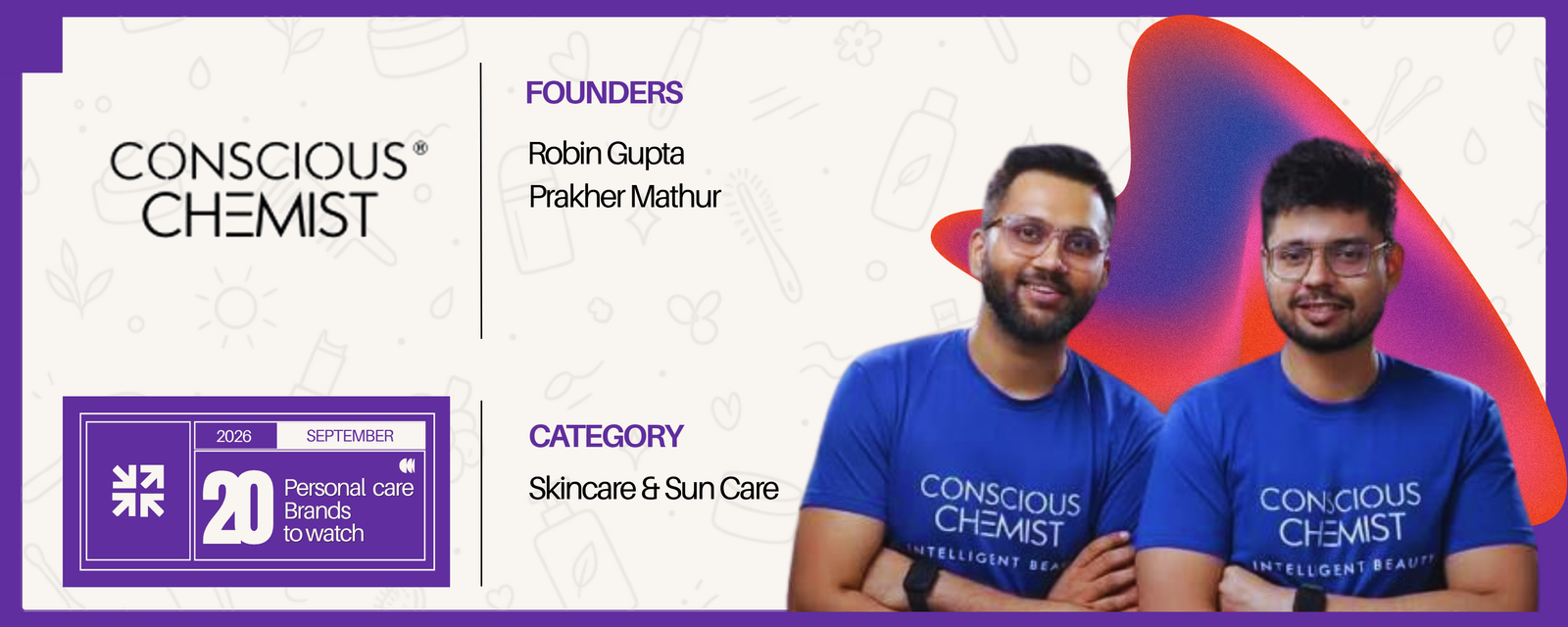
Category: Skincare + Sun Care
Market Proposition:
Conscious Chemist is building a skincare proposition around active ingredients, targeted concerns and performance-oriented formulations.
The brand operates in a consumer environment where skincare buyers are becoming increasingly comfortable evaluating ingredients and product functions.
This creates an opportunity to move consumers from generic personal care towards purpose-specific skincare routines.
Sun care is particularly significant within this shift. Sunscreen is increasingly being treated as an everyday skincare product rather than an occasional outdoor-use product. That creates a recurring category with potential for routine-led consumption.
The brand can also build around treatment-oriented products addressing concerns such as pigmentation, acne and skin texture.
Its proposition therefore sits between conventional beauty and more specialised clinical skincare.
The larger opportunity is the continued education of consumers around active skincare. As consumers become more informed, clear formulation communication can become a competitive asset.
However, this also increases competition. Many brands now use similar ingredient language and concern-based positioning.
The long-term opportunity will depend on product credibility, repeat usage and the ability to establish distinctive category associations rather than relying only on ingredient-led discovery.
18. Earth Rhythm

Category: Skincare + Haircare + Bath & Body
Market Proposition:
Earth Rhythm combines personal-care functionality with conscious consumption and sustainability-led product design.
Its portfolio spans multiple everyday categories, allowing the brand to participate across skincare, haircare and body care.
The broader opportunity is driven by consumers who increasingly consider not only what a product does but also how it is made, packaged and consumed.
This creates a distinct position within personal care. Sustainability becomes part of the product proposition rather than simply a communication theme.
The brand’s multi-category structure also provides room for routine expansion. Consumers can enter through one product and gradually explore other categories.
The key challenge is balancing sustainability with convenience and performance. Consumers may value responsible consumption, but everyday personal care remains highly dependent on ease of use, efficacy and affordability.
That makes product experience critical.
Earth Rhythm’s longer-term proposition is the possibility of making conscious personal care more mainstream.
Rather than limiting sustainability to a niche audience, the brand can participate in the broader transition towards products where environmental considerations, formulation and consumer experience are evaluated together.
19. Traya
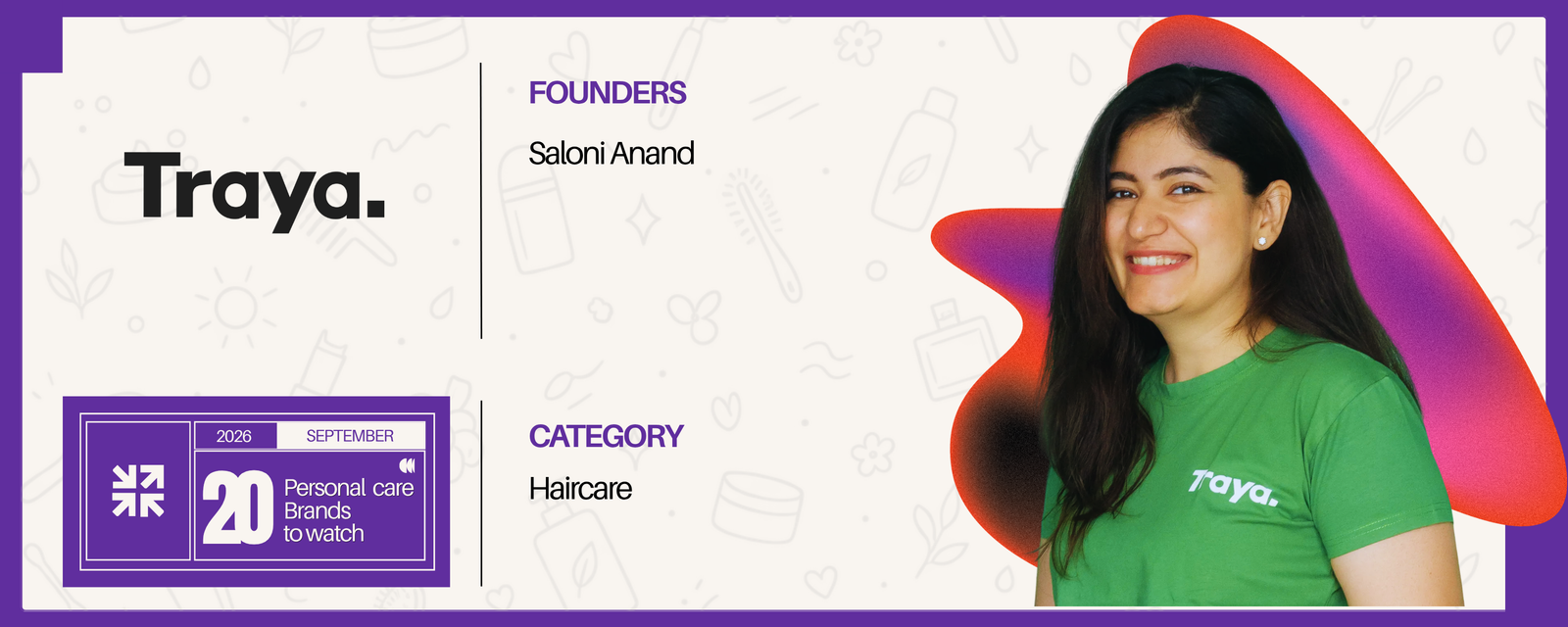
Category: Haircare + Personal Care Wellness
Market Proposition:
Traya approaches haircare through a problem-solving and personalised wellness model.
Rather than treating hair fall as a simple cosmetic concern, the brand positions it as a longer-term problem requiring assessment, consistency and a structured approach.
This changes the traditional haircare purchase journey.
Consumers dealing with persistent hair loss often move between shampoos, oils, supplements and treatments. A more integrated proposition can simplify that journey by connecting assessment, products and ongoing care.
This creates a stronger potential relationship than conventional haircare, where consumers often switch products frequently.
Traya’s proposition also demonstrates the convergence of personal care and wellness. Hair health sits between appearance, lifestyle and broader wellbeing, creating opportunities beyond conventional cosmetic products.
The larger market opportunity is the specialisation of haircare into targeted solutions.
As consumers become more aware of different hair and scalp concerns, generic products can increasingly give way to more personalised approaches.
The challenge is maintaining consumer engagement over longer treatment cycles.
Its market proposition is strongest when the brand becomes part of a structured hair-health routine rather than simply another product on the bathroom shelf.
20. Arata

Category: Haircare + Grooming
Market Proposition:
Arata is positioned around plant-led, conscious personal care across haircare and grooming.
Its proposition appeals to consumers who are increasingly interested in ingredient choices, formulation philosophy and more considered personal-care consumption.
Haircare provides a strong foundation because it is highly routine-driven. Products such as shampoo, conditioner, styling products and treatments can create recurring engagement.
The brand’s grooming presence also allows it to participate beyond hair, giving it an opportunity to address broader everyday personal-care needs.
The larger market opportunity lies in the growth of consumers who want a balance between performance and conscious consumption.
This group is not necessarily looking for purely natural products. Instead, it can include consumers who want greater transparency around ingredients and product choices while still expecting effective results.
Arata’s challenge is communicating this proposition without becoming too niche.
The strongest opportunity is to make conscious personal care feel like a mainstream lifestyle choice rather than a specialist category.
Its market proposition therefore sits at the intersection of haircare, grooming and conscious beauty, with room to expand as consumers increasingly evaluate personal-care products through both performance and formulation choices.
The next phase of personal care will be shaped by brands that understand changing consumer routines. Specialised products, focused categories, conscious formulations and stronger everyday relevance are becoming important parts of the purchase decision. These 20 brands represent different approaches to that shift, spanning emerging categories, evolving consumer needs and new ways of building personal care businesses in India.