
RESEARCH · DATA · INTELLIGENCEIndependent perspectives on markets and brands
Menu
HYPETRICS RESEARCH & INTELLIGENCE

Research, data and intelligence on the markets shaping India.

Explore Hypetrics' research across consumer behaviour, market data, brands, campaigns and companies worth watching.

India Hospitality Market

India Hospitality Market: Hotels, Travel Demand & 2030 Outlook

India’s hospitality industry is entering a period of sustained expansion. The market is benefiting from rising domestic travel, higher discretionary spending, improving connectivity, premiumisation and the growing presence of organised hotel brands across emerging destinations. The opportunity is also becoming broader. Hospitality demand is no longer concentrated only in Mumbai, Delhi, Bengaluru and other major business centres. Leisure destinations, religious centres, Tier 2 cities, emerging business hubs and wedding destinations are becoming increasingly relevant to hotel operators and investors. The next phase of India’s hospitality market will therefore be shaped by where travel demand develops, how frequently Indians travel and how much they spend when they do. India Hospitality Market at a Glance Market Indicator Hypetrics Assessment Domestic travel demand Strong International tourism opportunity High Hotel room demand Strong Premium & luxury hospitality High growth Tier 2 & Tier 3 opportunity High Business travel Growing MICE demand Strong potential Destination weddings Strong Wellness tourism Emerging Organised hotel supply Expanding Technology adoption Accelerating Investment interest Strong Competitive intensity Increasing Overall 2030 outlook Positive The industry’s growth is being supported by several independent demand engines rather than a single tourism cycle. That makes the long-term opportunity considerably broader than the traditional hotel market. 1. India’s Hospitality Market Is Becoming More Diverse The Indian hotel market has historically been concentrated around large metropolitan cities and established tourism destinations. That structure is changing. Improved road and air connectivity, expanding domestic consumption, new business centres and the development of tourism infrastructure are opening new markets for hospitality companies. Hotel demand is increasingly emerging from: This diversification is important because it reduces the industry’s dependence on any single category of traveller. Hypetrics View: The strongest hospitality opportunities over the next decade are likely to emerge where multiple demand segments overlap. 2. Domestic Travel Remains the Foundation India’s greatest structural advantage in hospitality is the size of its domestic travel market. Indians are travelling for more reasons and across more destinations than before. A leisure trip may now be combined with a wedding, religious visit, family gathering or business engagement. The traditional concept of an annual holiday is also becoming less relevant for affluent urban consumers. Travel increasingly includes: Travel Occasion Hospitality Opportunity Weekend breaks Short-stay hotels & resorts Family holidays Resorts & full-service hotels Religious travel Branded accommodation Business trips Business hotels Weddings Destination resorts Conferences MICE hotels Wellness Retreats & resorts Adventure Experiential stays The implication for hotel operators is straightforward: higher travel frequency creates a larger addressable hospitality market even without a dramatic increase in the number of travellers. 3. The Indian Traveller Is Spending Differently Price remains important, but the definition of value is changing. Travellers increasingly consider the overall experience when choosing accommodation. Location, service, food, reviews, design, convenience and experiences can influence the decision alongside room price. This is creating a wider spectrum of hospitality demand. Budget → Economy → Midscale → Upscale → Luxury → Experiential The growth opportunity is not limited to luxury hotels. Midscale and upscale properties can also benefit as consumers become more willing to pay for reliability and better experiences. Premiumisation is particularly relevant to leisure destinations, where accommodation is increasingly considered part of the holiday rather than simply a place to sleep. 4. Tier 2 and Tier 3 Cities Are Becoming More Important One of the most significant developments in Indian hospitality is the expansion beyond major metros. Hotel companies are increasingly looking at markets where travel demand is being created by: The result is a changing geography of hotel development. Established markets Mumbai, Delhi NCR, Bengaluru, Hyderabad, Chennai and Pune continue to support strong business and leisure demand. Emerging markets Ahmedabad, Jaipur, Lucknow, Indore, Chandigarh, Kochi and Bhubaneswar are becoming increasingly relevant to organised hospitality. Destination markets Goa, Rajasthan, Kerala, Uttarakhand, Himachal Pradesh and other leisure destinations continue to benefit from domestic and international tourism. The opportunity is therefore becoming less about entering India’s biggest cities and more about identifying the next commercially viable destination. 5. Organised Hospitality Is Expanding India remains a fragmented accommodation market, but organised hotel chains are steadily increasing their presence. The reasons are straightforward. Consumers value: Hotel companies also benefit from asset-light expansion models, allowing brands to enter new markets without owning every property themselves. This is encouraging the growth of multi-brand hotel portfolios covering different customer segments. A single hospitality company can now operate across: Economy | Midscale | Upscale | Luxury | Resorts | Extended Stay This gives established operators the ability to participate across a much larger portion of the market. 6. Hotel Revenue Is Expanding Beyond Rooms The room remains the core product, but the modern hotel increasingly operates as a broader hospitality platform. Revenue opportunities include: Revenue Stream Strategic Importance Rooms Core Food & beverage High Banquets High Weddings High MICE High Wellness Growing Experiences Growing Events Growing Memberships Emerging This is particularly important for resorts and premium properties. A hotel that can monetise a guest across accommodation, dining, events and experiences has significantly more revenue opportunities than a property dependent primarily on room sales. 7. Destination Weddings Are Creating New Hotel Demand India’s wedding economy has become an important hospitality demand driver. Large celebrations can generate demand for accommodation, banquets, food and beverage, events and transportation simultaneously. Destination weddings are particularly valuable because they create concentrated demand across multiple days. The hospitality opportunity extends beyond the wedding itself. Guests may arrive early, stay longer and participate in local experiences before or after the event. This makes destinations with attractive locations, strong hotel inventory and event infrastructure particularly valuable. Hypetrics View: Destination weddings should increasingly be viewed as a hospitality category rather than simply an events business. 8. MICE Is Strengthening Business Travel Meetings, incentives, conferences and exhibitions provide another important source of hotel demand. Large events can generate significant room-night requirements while simultaneously increasing spending on: MICE also helps hotels reduce their dependence on traditional leisure seasons. As India’s business ecosystem expands and more cities develop convention infrastructure, the MICE opportunity can


Read More »
ai startups

Global 15 AI Startups: The Companies Shaping What Comes Next in Artificial Intelligence

A Hypetrics Discovery Tracker of Companies Building Across the Next Generation of Artificial Intelligence Artificial intelligence is no longer developing around one category. Foundation models are competing with specialised enterprise platforms, AI search, coding systems, creative tools, legal applications and increasingly autonomous agents. Global 15 AI Startups brings together 15 companies operating across these different layers of the AI economy – from companies building core models to those turning AI into products for specific professional and creative workflows. This is a Hypetrics discovery tracker, not a ranking. The companies are presented to map the breadth of the global AI startup ecosystem and the different problems entrepreneurs are attempting to solve. # Company Primary Market Geography 01 OpenAI Foundation AI United States 02 Anthropic Foundation AI United States 03 Mistral AI Foundation AI France 04 xAI Frontier AI United States 05 DeepSeek Foundation & Reasoning AI China 06 Cohere Enterprise AI Canada 07 Perplexity AI Search & Research United States 08 ElevenLabs AI Audio & Voice UK / Poland 09 Synthesia AI Video United Kingdom 10 Hugging Face Open AI Infrastructure US / France 11 Cursor / Anysphere AI Coding United States 12 Harvey Legal AI United States 13 Sierra Customer-Service AI United States 14 Glean Enterprise AI United States 15 Runway Generative Video & World Models United States 01. OpenAI Founder Names: Sam Altman, Greg Brockman, Ilya Sutskever, John Schulman, Wojciech Zaremba and founding teamMarket: Foundation AI, Generative AI, AI AgentsWebsite: OpenAI OpenAI has become one of the central companies in the development and commercialisation of generative artificial intelligence. Founded as an AI research organisation, the company has expanded into a broad technology platform spanning foundation models, consumer applications, developer APIs and enterprise AI. Its best-known product, ChatGPT, helped move generative AI from a specialist technology into a mainstream computing interface. The company has since expanded its model capabilities across reasoning, coding, image generation, voice and increasingly agentic tasks. OpenAI describes its broader objective around developing increasingly capable AI systems and deploying them in ways intended to be useful and beneficial. OpenAI’s position is unusual because it operates simultaneously at several levels of the AI stack. Developers can build applications using its models, businesses can integrate AI into workflows, and consumers can interact directly with its products. The company is also operating at an enormous infrastructure scale. In March 2026, OpenAI announced a $122 billion funding round at an $852 billion post-money valuation, illustrating the capital requirements associated with frontier AI development. The market challenge for OpenAI is therefore no longer simply model capability. It is about converting increasingly powerful models into products, agents and infrastructure that can become embedded in how people work and use software. OpenAI represents the foundation-model layer of the AI economy, but its next phase increasingly involves turning intelligence into an operating layer for digital work. 02. Anthropic Founder Names: Dario Amodei, Daniela Amodei and founding research teamMarket: Foundation AI, Enterprise AI, AI SafetyWebsite: Anthropic Anthropic was founded around a research-led approach to building advanced AI systems with particular emphasis on reliability, interpretability and controllability. The company is led by co-founders Dario Amodei and Daniela Amodei and has developed Claude into one of the major general-purpose AI platforms. Anthropic describes itself as an AI safety and research company working to build reliable, interpretable and steerable systems. Claude has become the company’s primary interface with the market, but Anthropic’s broader proposition extends beyond an AI chatbot. Its models are used through APIs and enterprise deployments, placing the company in competition for the infrastructure layer behind business AI applications. Enterprise adoption creates a different set of requirements from consumer AI. Companies need models that can work with proprietary information, integrate with existing software and operate within security and governance frameworks. Anthropic has increasingly positioned Claude around these requirements. The company’s scale has also changed rapidly. In February 2026, Anthropic announced a $30 billion Series G round at a $380 billion post-money valuation. Anthropic’s development reflects the increasing concentration of capital and research talent around frontier AI. The company is competing not just on benchmark performance, but on model reliability, enterprise adoption, developer distribution and the ability to build systems that can perform increasingly complex tasks. Its central market question is how far a foundation-model company can move from being a model provider into becoming a long-term intelligence platform for organisations. 03. Mistral AI Founder Names: Arthur Mensch, Guillaume Lample, Timothée LacroixMarket: Foundation AI, Open Models, Enterprise AIWebsite: Mistral AI Mistral AI was founded in France in April 2023 by Arthur Mensch, Guillaume Lample and Timothée Lacroix. All three founders came from technical and research backgrounds, and the company entered a foundation-model market dominated largely by US technology companies. Mistral’s proposition has centred on building advanced AI systems while maintaining an emphasis on model accessibility, deployment flexibility and enterprise control. Its portfolio has expanded from early language models into assistants, coding systems, multimodal models, OCR and agent infrastructure. The company’s current enterprise proposition includes custom AI assistants, autonomous agents and multimodal AI, with deployment options spanning edge and cloud environments. That makes Mistral relevant to a growing enterprise requirement: organisations do not necessarily want every AI workload to depend on a single closed model provider. They may require greater control over deployment, data, model selection and infrastructure. Mistral has also developed a significant European identity. Its emergence gives France and Europe a prominent company operating in the foundation-model category at a time when governments and enterprises are increasingly discussing technological sovereignty. The company is consequently competing on several dimensions at once — model performance, efficiency, openness, enterprise integration and geographic relevance. Mistral’s trajectory illustrates how the global AI market is developing beyond a simple US-versus-China narrative. European companies are attempting to build their own model capabilities while creating commercial infrastructure around them. The company’s next phase will depend on whether its combination of frontier research, enterprise deployment and model flexibility can translate into durable adoption in a market where model capabilities are advancing rapidly. 04. xAI Founder:

Read More »
Ather

Ather: From Electric Scooter Maker to a Scaled Mobility Business

Ather Energy entered India’s electric two-wheeler market in 2013 with a more integrated approach to vehicle development. Founded by Tarun Mehta and Swapnil Jain, the company worked across vehicle engineering, battery technology and software rather than treating electrification as a standalone powertrain change. The Ather 450, launched in 2018, established the company’s early product identity. Ather combined electric performance with connected software and a digital ownership experience. The company also developed Ather Grid for charging and AtherStack as its software layer, creating infrastructure and technology around the vehicle. From One Scooter to a Wider Market For several years, Ather’s product portfolio remained relatively focused around the 450 platform. That changed with the Rizta launch in 2024. Rizta moved the company into the family-scooter segment and significantly widened its potential customer base. The shift was visible in volumes: Ather sold 109,577 units in FY2024, 155,394 units in FY2025, and 262,942 units in FY2026. The growth was not coming from product expansion alone. Ather was simultaneously increasing its retail presence and entering markets beyond its original strongholds. Distribution Became a Growth Engine Ather’s business increasingly began to depend on the physical infrastructure surrounding its products. By March 2026, the company had 700 Experience Centres, compared with 351 in March 2025. Its service network reached 548 centres in March 2026, while its charging network crossed 6,000 charging points. This expansion changes the economics of the business. A larger retail and service network requires capital and operating discipline, but it also creates more opportunities for test rides, sales, servicing and customer retention. The company’s challenge is therefore no longer simply making an electric scooter available. It is building enough infrastructure to support a much larger installed base. FY2026 Changed the Scale of the Business Ather recorded ₹3,823 crore in total income in FY2026, compared with ₹2,305 crore in FY2025. Vehicle volumes reached 262,942 units in FY2026, representing a 69% increase over 155,394 units in FY2025. The business also showed a change in its revenue composition. Non-vehicle revenue accounted for 13% of total income in FY2026, covering areas such as software subscriptions, charging, accessories, spares and services. Adjusted Gross Margin reached ₹925 crore in FY2026, with the adjusted gross margin at 24% of total income. The operating picture also improved. Ather’s net loss narrowed from ₹812 crore in FY2025 to ₹517 crore in FY2026. The numbers suggest that scale is beginning to influence the business beyond simply increasing vehicle sales. The Geography Is Changing Too Ather’s growth is increasingly spreading beyond the markets where it first established itself. In Q4 FY2026, Ather reported a 23.5% market share in South India, 17.3% in Middle India, and 12.1% in the rest of India. That expansion matters because India’s electric two-wheeler market is not a single consumer segment. Product preferences, price sensitivity, infrastructure availability and competitive intensity vary considerably across regions. The Rizta has given Ather a product suited to a broader customer profile, while the expansion of Experience Centres has created the physical distribution required to reach those customers. Capital Is Now Being Put Behind the Next Phase Ather entered the public markets in May 2025. In July 2026, the company raised ₹1,300 crore through a Qualified Institutional Placement, issuing 1,08,15,307 shares at ₹1,202 per share. The QIP was accompanied by another ₹1,200 crore preferential investment from existing investors, taking the broader capital raise to ₹2,500 crore. The capital is being directed toward areas including manufacturing expansion, product development, R&D, retail distribution and balance-sheet requirements. This marks a different stage for Ather. Capital is no longer primarily being used to establish the product. It is being deployed to increase the capacity of an operating business. The Manufacturing Question The next phase of Ather’s growth will require manufacturing capacity to keep pace with demand. The company has outlined plans around Factory 3.0 at AURIC in Maharashtra, with the facility intended to substantially increase production capacity as it comes online. This creates a new operating equation. More capacity can support higher volumes and potentially improve manufacturing efficiency. But it also increases the importance of utilisation, product mix and demand visibility. For Ather, manufacturing scale will need to grow alongside retail and product scale. What Ather Is Becoming Ather’s business today is considerably broader than the one that launched the Ather 450 in 2018. The company now operates across electric two-wheelers, software, charging, retail, servicing and accessories. The scooter remains the primary product, but the surrounding ecosystem increasingly contributes to the business. The evolution can be viewed in four stages: Product → Technology → Infrastructure → Scale The first stage was proving that Ather could build a differentiated electric scooter. The second added software and connected functionality. The third created the charging, retail and service infrastructure around the product. The fourth is now about making the entire system economically scalable. The Next Test Ather’s FY2026 performance shows strong growth in revenue and vehicle volumes alongside an improvement in gross margins and losses. But the next stage brings a different set of questions. Can higher volumes translate into sustained operating leverage? Can the expanding retail network generate sufficient productivity? Can new products broaden the market without weakening the brand’s positioning? And can manufacturing capacity stay aligned with demand? Ather has already moved beyond being an early electric-vehicle challenger. The next question is whether the company can turn its product, technology, manufacturing and distribution infrastructure into a consistently profitable mobility business.

Read More »
Nutrimate-Fitvia

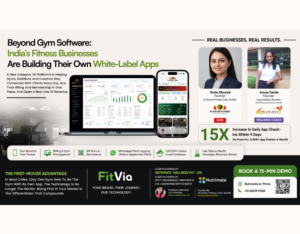
Beyond Gym Software: India’s Fitness Businesses Are Building Their Own White-Label Apps

A category that barely existed two years ago is changing how gyms, dietitians and coaches hold on to clients. Operators say the app matters less than what it finally shows them: everything that happens between sessions. 24 Seven Fitness Club runs one of North Maharashtra’s larger gym networks, with more than 5,000 members on its books. On 3 August it switched on its own branded app. Nine days later, daily check-ins through the app had risen fifteenfold, and the club is on pace for more than 4,000 app entries a month. India’s fitness industry has always leaked in the same place. A gym sells a membership, a dietitian sells a consultation, a coach sells a twelve-week programme. Then everyone loses sight of the client until the next payment falls due, or does not. Operators have tried closing that gap with WhatsApp groups, PDF plans and spreadsheets. A newer category is doing it differently, and the benefit has not spread evenly. In most markets the first operator to deploy sets the standard everyone else is then measured against. What is a white-label fitness app? A white-label fitness app is a ready-built platform that a gym, trainer, dietitian, physiotherapist or online coach launches under their own brand name and logo on Android and iOS, without building or maintaining the technology in-house. The technology belongs to the provider. The brand, the members and the revenue belong to the business. Several providers now compete in India, pricing a setup fee plus a monthly subscription instead of the capital cost of custom development. Built in-house, the same product has run into several lakhs of rupees and six to nine months of work. White-label deployment takes days. Inside a Nashik rollout The platform behind the Nashik rollout is FitVia, built by Maharashtra-based Nutrimate Wellness Pvt. Ltd. (CIN U62099PN2025PTC246976; DPIIT-recognised, DIPP225670). Deployment took days rather than the months an in-house build would have required, and usage climbed through the opening fortnight before settling into steady daily traffic. “Members today expect far more than equipment and air conditioning. They want to be tracked, guided and remembered. Putting our own app in their pocket changed the conversation from monthly fees to daily progress,” said Smita Bhosale, Founder of 24 Seven Fitness Club, Nashik. “Renewals improved. So did the quality of conversation our trainers have with members every day.” What owners describe is a shift from transaction to visibility. Entry data shows who is training, who has stopped and who is about to lapse, while there is still time to make the call. Most gyms find out only when a renewal date passes. Late movers face a second problem: members who have already trained on a tracked programme elsewhere come to treat it as standard rather than as a reason to choose you. Billing, renewals and payment tracking run from the same web dashboard, replacing gym-management software many clubs pay for separately. A newer layer adds a second income stream. Preventive health packages and lab tests are booked through NABL-accredited laboratories inside the same app, earning the business a share on every booking. The feature set •      White-label branded app on Android and iOS, carrying your name and logo from day one •      Web dashboard for billing, renewals, members, trainers and multiple branches •      QR-based entry and attendance, showing live footfall, peak hours and inactive members •      Personalised workout and diet plan builders •      Trainer’s own video library, so members follow form shown by their own coach •      WhatsApp meal logging (patent application filed): clients log a meal by messaging •      1,00,000+ Indian food database covering regional, home-cooked and restaurant dishes •      Trainer dashboard showing real-time client nutrition, calories and activity •      Preventive health packages and lab tests via NABL-accredited laboratories, with revenue share Specialists are moving faster than large gyms The sharper shift is among specialist practitioners and creators, people with strong audiences who still run paid clients on spreadsheets. “My clients need daily accountability, not a weekly check-in,” said Anuya Zende, Founder of Mumbai-based Yoganubhav, which offers premium wellness coaching for PCOS reversal and prenatal health. “With my own app I record every movement in my own form, assign the plan, and actually see whether it was done. Bloodwork happens through the same app instead of sending a client to three different places. That is what makes a premium programme deliverable rather than just expensive.” For dietitians, it replaces scattered chat threads with a structured practice under their own brand. For physiotherapists, it closes the oldest gap in recovery. The limits A branded app is no substitute for a weak service. Operators who deploy one and ignore the data report the same churn as before. The platform surfaces the problem. The follow-up call is still a human job, and daily use depends on trainers, which is a management question rather than a technology one. The first-mover question In most cities only one gym gets to be the one with its own app. The second is not differentiated. It is catching up. Technology is no longer the barrier; the question is who moves first in their market. “The fitness leaders of the next decade in India may not be the businesses with the biggest facilities or the largest following,” said Pradnya Ganorkar, Co-Founder of Nutrimate Wellness Pvt. Ltd. “They will be the ones with the strongest daily digital relationship with their clients. That window is open right now.” About Nutrimate Wellness Pvt. Ltd. Nutrimate Wellness Pvt. Ltd. (CIN U62099PN2025PTC246976) is a Maharashtra-based, DPIIT-recognised health-tech startup (DIPP225670). Patent applications have been filed covering WhatsApp-based meal logging, health scoring and caregiver connection. Its B2B platform FitVia provides white-label branded apps, billing and gym management dashboards, QR-based entry, NABL-accredited lab test bookings and member health tracking. Supported by Google for Startups and Zoho for Startups. Details at nutrimate.in/fitvia. Media Contact Pratik Geet, Co-Founder, Nutrimate Wellness Pvt. Ltd. | pratikgeet@nutrimate.in | +91 96379 91129

Read More »
Olipop

The $1.85 Billion Question Behind OLIPOP

OLIPOP entered the U.S. beverage market in 2018 with a proposition that combined a familiar product format with a different nutritional profile. Founded by Ben Goodwin and David Lester, the company developed carbonated drinks containing prebiotic fiber and relatively low levels of sugar. Rather than creating an entirely new beverage occasion, OLIPOP positioned its products as an alternative within an existing category. That distinction became important as consumer interest in functional ingredients, digestive health and lower-sugar products increased. The company has since moved well beyond the scale of an emerging beverage startup. OLIPOP was reported to have generated more than $400 million in annual sales and expanded its retail presence to nearly 50,000 stores. In February 2025, the company raised $50 million in Series C funding at a reported valuation of $1.85 billion. The numbers place OLIPOP among the more significant independent beverage companies in the U.S., but they also create a larger question around the business: how much further can the company grow from its current base? A $1.85 Billion Valuation Against $400 Million+ Revenue The $1.85 billion valuation represents more than the current size of OLIPOP’s business. Private-market valuations generally reflect expectations around future revenue, category expansion, profitability and market position. With reported annual sales above $400 million, the company had already established meaningful commercial scale when the latest funding round took place. The valuation therefore represents an expectation that the business can continue growing substantially rather than simply maintain its existing level of sales. That creates a different challenge from the one OLIPOP faced in its earlier years. A young beverage company can grow rapidly by entering new stores, attracting its first customers and establishing awareness. At several hundred million dollars in annual revenue, the absolute amount of additional revenue required to maintain similar growth rates becomes much larger. Moving from $400 million to $800 million, for example, requires another $400 million in sales. That requires substantially more distribution, production capacity and recurring consumer demand. The valuation therefore becomes a useful lens through which to examine the company’s next phase. The question is not whether OLIPOP has found consumers. The existing revenue indicates that it has. The question is whether the same proposition can continue generating strong growth at a much larger scale. The Category Was Expanding With It OLIPOP’s growth has taken place alongside a broader shift in the U.S. beverage market. Consumers have increasingly shown interest in products that combine familiar formats with functional ingredients or different nutritional profiles. Prebiotic beverages became one expression of that shift, creating space between traditional soft drinks and more specialized health-oriented products. OLIPOP and Poppi became prominent independent brands within this segment. Their growth helped establish functional soda as a recognizable category rather than an isolated product concept. The category subsequently attracted larger beverage companies, bringing significantly greater distribution and marketing resources into the market. This development is important for OLIPOP because category growth and competitive pressure are happening simultaneously. A larger category provides more potential consumers, but it also makes the market more attractive to companies with considerably greater resources. The Product Is Familiar. The Competition Is Not. One of OLIPOP’s commercial characteristics is the familiarity of its product format. The portfolio includes recognizable soda profiles such as cola, root beer and cream soda, while the formulation incorporates prebiotic fiber and lower sugar. Consumers therefore do not need to learn an entirely new way of consuming the product. This familiarity can reduce the barrier to trial, but it also means that the concept can be replicated by competitors. Once consumers understand functional soda as a category, the decision becomes less about understanding the proposition and more about choosing between available brands. That changes the competitive equation. Taste, price, availability, product formulation, brand recognition and consumer habits all begin to influence the purchase decision. The functional proposition can create differentiation, but it cannot by itself guarantee that consumers will repeatedly choose one brand over another. Distribution Is Becoming More Important OLIPOP’s expansion to nearly 50,000 stores represents a significant change from the company’s earlier stage. Beverage businesses depend heavily on physical availability because consumers typically purchase drinks through established retail channels rather than planning purchases far in advance. However, increasing the number of stores does not automatically translate into proportional revenue growth. The more important metric is what happens within those stores. Product velocity, repeat purchasing, shelf placement, pricing and inventory levels determine how effectively distribution translates into sales. This becomes particularly relevant as OLIPOP’s retail footprint grows. Maintaining strong sales across a larger network can require continued investment in marketing, retailer relationships and product availability. The company’s 2025 funding was intended in part to support product development, marketing and distribution, indicating that these areas remain central to its expansion strategy. Coca-Cola and PepsiCo Changed the Competitive Landscape The functional soda market became significantly more competitive in 2025 as major beverage companies moved into the category. Coca-Cola introduced Simply Pop, a prebiotic soda positioned around digestive health and lower sugar. The launch placed one of the world’s largest beverage companies directly into a space previously dominated by smaller emerging brands. PepsiCo took a different approach by acquiring Poppi for approximately $1.95 billion. The transaction provided PepsiCo with an established brand in the same broader category in which OLIPOP operates. These moves have two implications for OLIPOP. First, they indicate that large beverage companies see sufficient commercial potential in functional soda to justify significant investment. Second, they introduce competitors with established manufacturing, distribution and retail relationships. For OLIPOP, category validation therefore comes with a cost. The company helped establish demand for the segment, but the segment is now attracting companies capable of competing at a much larger operational scale. The Poppi Deal Provides a Useful Benchmark The PepsiCo-Poppi transaction also gives investors and the broader market a reference point for how established beverage companies value brands in this category. The approximately $1.95 billion acquisition price is close to OLIPOP’s reported $1.85 billion private valuation, although the two numbers represent

Read More »
Emergent

Deconstructing Emergent: The Complete Institutional Report on the AI-Native App Engine

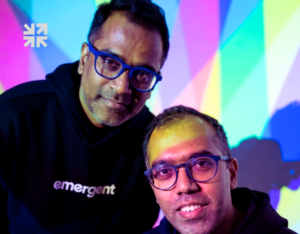
For decades, the global technology economy has been bottlenecked by a single fundamental constraint: the technical barrier to writing computer software. Converting a business concept into a functioning web or mobile application required specialized software engineering skills, multi-month project cycles, and significant capital investment. Emergent, founded in 2024 by twin brothers Mukund Jha and Madhav Jha, represents a structural shift in how software is created. Operating across dual hubs in the United States and India, Emergent has engineered a platform that translates natural language instructions directly into production-ready software architectures. By replacing traditional syntax-heavy programming with conversational directing—a movement colloquially termed “vibe-coding”—Emergent has quickly scaled into a high-valuation AI platform. This report by Hypetrics deconstructs Emergent’s founding vision, product architecture, financial performance, competitive positioning, and long-term strategic outlook. 1. Company Background & Founder Story Emergent was established with a singular objective: to democratize software creation by eliminating the code synthesis step entirely. Co-founders Mukund Jha and Madhav Jha recognized that while Large Language Models (LLMs) excelled at generating isolated code snippets, software developers spent most of their time orchestrating complex systems—connecting user interfaces to databases, configuring server environments, managing authentication, and deploying code to cloud providers. Recognizing this gap, the founders designed Emergent to act not as an “autocomplete” tool for developers, but as an autonomous software engineering team. By utilizing dual operations in the United States (for go-to-market and capital raising) and India (for core AI engineering and infrastructure research), Emergent achieved continuous development velocity, allowing it to move from launch to unicorn status within two years. 2. Product Deconstruction & How It Works To understand Emergent, one must separate traditional software generation tools from autonomous system compilers. Older tools required users to write code manually or drag-and-drop visual blocks inside constrained page builders. Emergent operates through a conversational multi-agent framework. A. The Three-Step User Journey B. The Technical Engine: Multi-Agent Orchestration Instead of relying on a single AI model to write an entire codebase sequentially, Emergent uses specialized sub-agents: 3. Financial Health, Growth Metrics & Revenue Model Emergent’s financial trajectory highlights the rapid monetization potential of AI developer platforms. By targeting non-technical business founders, internal enterprise teams, and rapid-prototyping agency developers, the company has achieved top-tier software-as-a-service (SaaS) growth metrics. Metric Estimated Value / Status Strategic Significance Annual Recurring Revenue (ARR) ~$30M – $50M+ Reached tens of millions in ARR within months of public launch. Total Venture Funding ~$230 Million+ Capital utilized primarily to fund high LLM inferencing costs. Latest Valuation $1.5 Billion Series C valuation affirming unicorn status. YoY Revenue Growth Rate >300% Driven by viral self-serve onboarding and tier upgrades. Gross Margin Profile ~50% – 60% Impacted by high underlying LLM token costs; improving with caching. Revenue Generation Structure Emergent operates a multi-tiered subscription model paired with usage-based compute credits: 4. Market Space, Total Addressable Market (TAM) & Share Emergent sits at the intersection of two massive markets: the $800 Billion+ Global Software & IT Services Industry and the rapidly expanding $25 Billion+ Low-Code / No-Code & AI Developer Tools Market. The Market Landscape Historically, companies spent tens of thousands of dollars developing custom internal tools (e.g., inventory management dashboards, client portals). Emergent shifts this expenditure away from outsourced IT agencies and expensive internal development teams directly into software subscription platforms. Competitive Analysis Platform Target Audience Primary Focus Emergent’s Advantage Cursor Professional Programmers AI-assisted code editor (IDE) Emergent requires zero coding knowledge. Bolt.new / v0 Developers & Designers Quick component & UI generation Emergent builds full-stack backend databases. Replit Developers & Students Cloud coding environment Emergent automates the entire software build. Emergent Founders, Teams & Non-Coders Full-stack autonomous software generation Complete end-to-end build via conversational prompts. 5. Structural Moats & Risk Factors While Emergent’s growth trajectory is steep, maintaining long-term defensibility in the fast-moving AI landscape requires navigating key structural risks. A. Strategic Moats (Defensibility) B. Key Risk Factors 6. Future Vision & The Institutional Verdict Emergent’s long-term vision extends beyond building individual web apps. The company aims to construct an autonomous digital workforce capable of designing, deploying, maintaining, and updating complex enterprise software environments continuously. In the near future, Emergent plans to introduce Autonomous Maintenance Agents – AI systems that monitor live user analytics, detect software bugs in real time, and deploy patches automatically without human intervention. Furthermore, as natural language processing advances, software design will transition from static manual creation into a dynamic, real-time personalized experience. The Hypetrics Verdict Emergent is not merely another AI developer tool; it represents a fundamental shifting of software creation economics. By turning human language into executable, production-ready software, Mukund and Madhav Jha have unlocked a new category of digital creation. For investors, founders, and corporate leaders, Emergent offers a clear case study in how AI native platforms can compress time-to-market, democratize technology ownership, and build massive enterprise value at unprecedented speed.

Read More »