
RESEARCH · DATA · INTELLIGENCEIndependent perspectives on markets and brands
Menu
HYPETRICS RESEARCH & INTELLIGENCE

Research, data and intelligence on the markets shaping India.

Explore Hypetrics' research across consumer behaviour, market data, brands, campaigns and companies worth watching.

Protein

India Protein Market 2026: How Much Are Indians Spending on Protein?

From a ₹44,048 crore protein-based product market to growing demand for supplements, whey, bars and everyday high-protein foods, the data shows how India’s protein consumption is changing.  India’s protein market is no longer limited to gyms and bodybuilding. Protein powders, whey, bars, beverages, dairy products and protein-enriched foods are becoming part of a broader consumer category. At the same time, India’s protein intake continues to come largely from conventional foods. The latest market estimates, government data and 2026 consumer research point to a category developing across both dimensions: more products are being built around protein, while consumers are becoming more conscious of protein in their diets. India’s Protein-Based Product Market Has Reached ₹44,048 Crore India’s protein-based product market was valued at ₹44,048.3 crore in 2025, according to IMARC Group. The market is projected to reach ₹1,60,767.3 crore by 2034, representing a 14.70% CAGR between 2026 and 2034. The broader market includes protein powders, bars, supplements, drinks, cereals, protein-rich snacks and other protein-based food and beverage products. Animal and dairy protein represented the largest source segment in 2025, while South India was the largest regional market. The Protein Supplement Market Is a Smaller Segment The dedicated protein supplement market provides a narrower view of India’s commercial protein consumption. IMARC estimates India’s protein supplements market at US$912.9 million in 2025. The market is projected to reach US$1.58 billion by 2034, growing at a 6.27% CAGR between 2026 and 2034. The category includes products such as protein powders and other nutritional supplements. This distinction matters because India’s protein opportunity is considerably larger than the traditional protein-supplement category. Whey Protein Remains a Distinct Market Whey continues to be one of the most established protein formats in India. The India whey protein market increased from US$185.9 million in 2025 to an estimated US$192 million in 2026, according to IMARC. It is projected to reach US$251.1 million by 2034, representing a 3.27% CAGR between 2026 and 2034. Whey protein concentrate accounted for 48.5% of the market in 2025, while sports and performance nutrition represented 62.4% of applications. West India accounted for 32.6% of the market in 2025. The data indicates that whey remains closely connected to India’s fitness and sports-nutrition consumer base, even as protein itself expands into broader food categories. Protein Bars Are Creating Another Consumption Occasion Protein is also moving into the snacking category. India’s protein bar market reached an estimated US$130.2 million in 2025. IMARC projects the category to reach US$200.7 million by 2034, representing a 4.68% CAGR between 2026 and 2034. Unlike protein powders, bars can fit into multiple consumption occasions. They can be consumed between meals, during travel, at work or after exercise. This gives the category relevance beyond consumers who actively identify with fitness or bodybuilding. India’s Protein Intake Still Comes Mainly From Conventional Food The commercial market tells only part of India’s protein story. The latest nationally representative official data comes from the Household Consumption Expenditure Survey 2023-24, published by India’s Ministry of Statistics and Programme Implementation. Average daily per-capita protein intake in 2023-24 was 61.8 grams in rural India and 63.4 grams in urban India. The corresponding figures in 2022-23 were 61.9 grams and 63.2 grams respectively. This means urban per-capita protein intake increased slightly between 2022-23 and 2023-24, while rural intake remained broadly stable. The same dataset shows a longer-term increase. Rural protein intake rose from 59.3 grams in 2009-10 to 61.8 grams in 2023-24. Urban intake increased from 58.8 grams to 63.4 grams over the same period. Cereals Still Supply a Large Share of India’s Protein India’s growing packaged protein market has not replaced conventional sources. Cereals remain the largest contributor to protein intake among the five broad food groups tracked in the government’s nutritional-intake analysis. In 2023-24, cereals accounted for 45.9% of protein intake in rural India and 38.7% in urban India. Pulses contributed 8.7% in rural India and 9.1% in urban India, while milk and milk products contributed 11.0% and 12.9% respectively. Egg, fish and meat contributed 12.4% of rural protein intake and 14.1% of urban protein intake in 2023-24. Consumer Awareness Is Growing, But Confusion Remains The commercial opportunity is also being shaped by consumer awareness. A PulseAI Research study published in 2026 surveyed 2,000 Indian consumers, ranging from fitness enthusiasts to casual eaters, to understand how Indians consume and evaluate protein. The research found a gap between consumer awareness and actual clarity around protein. PulseAI reported that 41% of respondents actively track or estimate their protein intake. The research also found that 93% of consumers who regularly track their protein intake reported confusion around protein-related information. Affordability Remains a Consumer Consideration A separate 2026 survey commissioned by Country Delight and conducted with LocalCircles collected more than 207,000 responses across India’s top 25 metro and urban districts. The survey found that 74% of respondents did not know the recommended daily protein requirement for an average adult, while 85% did not track their daily protein intake. The study also reported that 71% of respondents were willing to switch to more affordable protein alternatives. Protein Is Becoming a Product Attribute The first major wave of India’s packaged protein market was closely associated with: Whey → Gym → Muscle → Performance The broader category now looks different. Protein is appearing across dairy, snacks, beverages, breakfast products, functional foods and supplements. This expands the potential consumer base. A consumer does not necessarily need to identify as a fitness enthusiast to purchase a product positioned around protein. Protein can increasingly function as a product attribute, rather than being the entire reason for purchase. Plant Protein Adds Another Layer Plant-based protein is also becoming a distinct part of India’s protein market. IMARC estimates India’s plant-based protein market at US$634.3 million in 2025. The market is projected to reach US$2.25 billion by 2034, representing a 14.36% CAGR between 2026 and 2034. Soy protein represented 38.4% of the market in 2025, while pea protein was identified as the fastest-growing source segment. What the Data Shows India’s protein market is developing

Read More »
Agnikul

Agnikul Cosmos: From 3D-Printed Engines to a New Architecture for Commercial Space

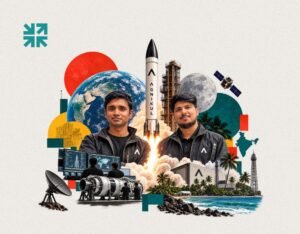
India’s private space industry is moving into its next phase. The first phase was about proving that private companies could design and build sophisticated space hardware. The next is about building systems that can operate repeatedly, serve commercial customers, reduce the friction of getting payloads into orbit and eventually create an economically sustainable launch business. Agnikul Cosmos is now operating at that transition point. The Chennai-based space technology company, founded in 2017, began with a focused question: why should small-satellite customers have to fit their missions around the schedules and requirements of large launch vehicles? Its answer was to build a launch architecture around the payload rather than force the payload to adapt to the rocket. Nearly a decade later, that idea has expanded into a much larger technology and infrastructure proposition. Agnikul is developing orbital-class launch vehicles, manufacturing its own propulsion systems, operating its own private launch infrastructure, investing in reusable-stage technology and exploring the possibility of using space itself as infrastructure for applications such as orbital computing. For Hypetrics, the important story is not simply that Agnikul has built a 3D-printed rocket engine. The bigger story is how the company is attempting to turn flexibility, vertical integration and reusability into the foundation of a commercial space transportation business. The Problem Agnikul Set Out to Solve Agnikul’s origin can be traced to a change taking place in the satellite industry. Satellites were becoming smaller, more specialised and more numerous, but launch systems were not necessarily evolving at the same pace. A small satellite operator could build a sophisticated spacecraft and still face a fundamental commercial constraint: getting that spacecraft into the precise orbit required at the right time. Traditional rideshare missions solve part of the cost problem because multiple payloads share one rocket. But the trade-off is reduced control. The primary mission determines the launch schedule, destination and often the broader mission architecture, leaving smaller customers to work around someone else’s requirements. Agnikul was built around the alternative. The company’s stated philosophy is that launches should become customer-driven rather than launch-vehicle-driven. Its current platform allows a prospective customer to specify variables including launch location, orbital inclination, payload mass, orbital altitude and payload integration requirements before building the proposed mission architecture. That changes the commercial proposition. Instead of asking a customer, “Which rocket can carry your satellite?”, the underlying question becomes, “What launch configuration best fits your mission?” That distinction has shaped much of Agnikul’s technology roadmap. The Technology Strategy: Simplify the Rocket by Changing How It Is Made Rocket engines are among the most demanding components in aerospace. They have to withstand extreme temperatures, pressures and mechanical forces while maintaining highly controlled combustion. Conventional engine manufacturing can involve a large number of individual components, manufacturing processes and joining operations. Agnikul took a different approach. Its Agnilet propulsion system was developed as a single-piece, 3D-printed semi-cryogenic rocket engine. The company designs and manufactures the engine in-house using Inconel, integrating components such as the injector and cooling channels into the printed structure rather than treating them as a large collection of separately manufactured components. The significance is not simply that the engine comes from a 3D printer. The deeper advantage Agnikul is pursuing is manufacturing simplification. Fewer individual components can potentially mean fewer joints, fewer interfaces, fewer manufacturing operations and a more standardised production process. That matters enormously when a launch company wants to move from making one technically successful vehicle to producing multiple flight-ready vehicles. The company has also developed its own post-print processes, including CT scanning, heat treatment, grinding and cleaning. This is part of a broader pattern in Agnikul’s strategy: control more of the technology stack rather than relying on a fragmented external supply chain. That philosophy extends beyond the engine. The company says its avionics architecture has been designed around the modular nature of its launch vehicle, while propulsion components are also developed in-house. Agnibaan: A Launch Vehicle Designed Around Mission Flexibility At the centre of Agnikul’s commercial ambition is Agnibaan, its orbital-class launch vehicle. Agnibaan is designed to carry small satellites into low Earth orbit, with the company building flexibility into the vehicle through configurable first-stage engine arrangements. The current product information lists a vehicle mass of approximately 490 kg and an orbit around 680 km, while emphasising that the vehicle architecture can be configured according to mission requirements. This modularity is more significant than it may initially appear. A launch vehicle cannot simply remove an engine and automatically become a smaller rocket. Changing engine count affects thrust-to-weight ratio, vehicle controllability, stability and aerodynamic behaviour. Agnikul says it has engineered the vehicle so different configurations can maintain appropriate flight characteristics. The company’s second-stage architecture uses the Agnite vacuum-optimised engine, based on the same broader propulsion philosophy. Agnikul also describes electric-pump-fed propulsion as a way of improving propellant utilisation while enabling configurable engine clustering. In business terms, the objective is straightforward: avoid building a completely different rocket for every customer requirement while still maintaining enough flexibility to serve different payload classes. That makes the launch vehicle itself a configurable platform. SOrTeD Was More Than a Test Flight Before Agnibaan can become a commercial orbital launcher, Agnikul needed to validate its technologies under actual flight conditions. That happened on 30 May 2024, when the company launched Agnibaan SOrTeD Mission-01 from Agnikul Launchpad-01 at Sriharikota. The mission became an important milestone because several pieces of the company’s architecture came together in one operation: indigenous propulsion, a privately developed launch facility, flight operations and coordination with the Indian space ecosystem. The launch vehicle used for the mission was sub-orbital rather than an orbital commercial launcher. The company initially developed SOrTeD as a technology demonstrator, but following the successful mission it repositioned the vehicle as a standalone product for low-altitude and near-space applications. Agnibaan SOrTeD can carry payloads of up to 30 kg and is positioned for experimentation, technology validation and other missions where reaching near-space environments is more important than establishing orbit. This creates another potential layer in Agnikul’s

Read More »
Glean

Glean’s Evolution From Enterprise Search to an AI Work Platform

Glean began with a problem that existed long before generative AI became part of the enterprise software conversation: companies had too much information and too many places to store it. Employees were working across cloud drives, communication platforms, CRM systems, project-management software, internal knowledge bases and countless other applications. Finding information was often less about whether the information existed and more about knowing where to look for it. Founded in 2019 by Arvind Jain, Glean entered this market by building enterprise search around the way organisations actually stored and accessed knowledge. Over time, that starting point has given the company a broader opportunity. Search is now becoming one component of a platform designed to understand company information, assist employees and increasingly execute work across enterprise systems. Search Was the Starting Point Glean’s initial proposition was relatively straightforward. Instead of forcing employees to search separately across every application used by their organisation, the company connected information from multiple enterprise systems and created a unified search experience. The underlying challenge, however, was more complicated than simply indexing documents. Enterprise information has context. A document may be relevant to one employee but inaccessible to another. A customer record may connect to a sales opportunity, an internal discussion and a product document. A company policy may have several versions, with only one being current. Glean’s product therefore had to understand not only where information was located, but also how it related to people, teams and business systems. That became an important foundation for what followed. By creating connections between enterprise applications, Glean was building a layer of organisational context at a time when most enterprise software remained organised around individual applications. AI Changed What Search Could Do The arrival of generative AI created a new use case for that underlying infrastructure. Traditional search could locate relevant information, but generative AI could interpret it and produce an answer. Glean introduced its AI Assistant to bring this interaction into the workplace, allowing employees to ask questions using natural language and receive responses based on information available within their organisation. The distinction between Glean and a general-purpose AI chatbot lies largely in the source of the information. A general AI model can answer questions about publicly available knowledge, but it does not inherently understand a company’s internal product roadmap, customer relationships, policies, documents or organisational structure. Glean’s proposition is based on connecting AI to that internal context while respecting enterprise permissions. The result is intended to make company knowledge accessible through a conversational interface without treating the organisation’s information as one undifferentiated database. This also gave Glean a new way to expand beyond search. Once employees could ask the system questions about company information, the same infrastructure could support content creation, analysis and other forms of knowledge work. The Enterprise Data Layer Became More Important The scale of Glean’s connected information has grown alongside the product. By December 2025, the company said its platform had indexed more than 27 billion documents and connected with more than 100 enterprise SaaS applications. The significance of these numbers is not simply the volume of information being indexed. It is the breadth of the organisational context that can potentially be made available to the platform. For enterprise AI, context is becoming an important part of the product architecture. A model may provide the reasoning capability, but the usefulness of that model inside a company depends on what information it can access, what the employee is allowed to see and how that information connects to the business. Glean is attempting to occupy this layer between the company’s existing software systems and the AI models that can operate on top of them. That positioning also gives the company some distance from the underlying model race. The leading AI models are changing quickly, and enterprises may use different models for different workloads. Glean’s role is not necessarily to own the model itself. Its role is to connect models to enterprise context, information and workflows. From Answering Questions to Executing Work The next step was to move beyond providing answers. In 2025, Glean expanded into AI agents, allowing organisations to create systems that can perform multi-step tasks across connected applications. This changes the role of the platform from information retrieval toward workflow execution. The distinction is important. Search helps an employee find something. An assistant helps the employee understand something. An agent can potentially take the next action. Consider a sales organisation. An employee might ask for the latest information about a customer. A search system can locate the relevant documents. An AI assistant can summarise the account and identify important developments. An agent could potentially use that information to update systems, prepare a response or initiate a workflow. Each stage builds on the same underlying access to organisational information. Glean said in June 2025 that its platform was already supporting more than 100 million agent actions annually, indicating that agent activity was becoming a measurable component of usage rather than simply an experimental feature. Glean Is Expanding Horizontally One of the more important aspects of Glean’s strategy is that it has not confined the product to a single business function. The platform is designed to work across departments, including sales, engineering, human resources, finance, customer service and other knowledge-intensive functions. That approach is visible in the company’s customer expansion. Glean said in May 2026 that more than 85% of its customers were deploying the platform across five or more departments. The company also reported that its Fortune 500 customer base had nearly doubled year over year. The significance is commercial as much as technological. A product used by one department has a natural ceiling within an organisation. A platform adopted across multiple functions has a much larger potential footprint. Once the enterprise has connected its information systems and established the necessary permissions and controls, additional departments can become new use cases on top of the same infrastructure. This creates a different expansion model from traditional enterprise software. Instead of selling a separate application

Read More »

50 Companies Making Their Move Forward

India’s business landscape is entering a phase where ambition is translating into action. Across industries, companies are investing in new ideas, expanding capabilities, entering new markets and building businesses around changing consumer and industry needs. Product development, technology, manufacturing, distribution and innovation are creating new avenues for growth often in categories that are undergoing significant change themselves. This list brings together 50 companies that are making meaningful moves forward across their respective businesses. The selection covers a wide range of sectors and business models, from consumer brands and technology companies to manufacturers, startups, B2B businesses and emerging category players. The focus is not simply on how large a company is today, but on what it is building, changing or expanding next. Some are introducing new products. Some are strengthening their manufacturing capabilities. Others are expanding their reach, entering adjacent categories, developing new technologies or creating entirely new ways of serving their markets. Together, these moves offer a snapshot of how Indian businesses are evolving, where opportunities are emerging and how companies are preparing for their next phase of growth. 1. SNITCH Category: Fashion & MenswearFounder: Siddharth Dungarwal Snitch is an Indian menswear brand focused on contemporary clothing for consumers who want trend-led styles without the complexity of traditional fashion retail. Founded by Siddharth Dungarwal, the brand began as a digital-first business and has since expanded its presence across online and offline channels. Its product range spans shirts, T-shirts, trousers, jeans, co-ord sets, jackets and other everyday menswear, with an emphasis on frequently refreshed designs. Snitch’s approach is built around understanding changing fashion preferences and bringing new styles to customers at a faster pace than conventional apparel businesses. The brand has also been building a stronger physical retail network alongside its online business. This omnichannel strategy allows Snitch to combine digital discovery with in-store shopping, giving customers multiple ways to interact with the brand while expanding its reach across Indian markets. A key part of Snitch’s proposition is its ability to respond quickly to emerging trends. Frequent product introductions help it maintain a fresh assortment and encourage customers to return regularly to discover new styles. This model has helped the company establish a distinct position within India’s rapidly evolving menswear market. As Snitch enters its next stage of growth, its focus is increasingly moving towards scale. Expanding stores, widening its product portfolio and strengthening its ability to deliver new fashion quickly are central to its ambitions. Rather than remaining an online fashion label, Snitch is building a broader menswear business designed to compete across India’s growing fashion retail landscape. 2. AGNIKUL COSMOS Category: Space Technology & Launch VehiclesFounder: Srinath Ravichandran, Moin SPM and Satyanarayanan Chakravarthy Agnikul Cosmos is an Indian space technology company developing orbital-class launch vehicles for the growing small-satellite market. Founded in Chennai and incubated at IIT Madras, the company is building a launch system designed around flexibility, faster mission preparation and customised access to low Earth orbit. At the centre of Agnikul’s technology is its Agnilet engine, a single-piece, 3D-printed semi-cryogenic rocket engine developed and manufactured in-house. The company has extended this approach beyond propulsion, developing its own avionics, autopilot and other launch-vehicle systems. Its flagship Agnibaan is designed as a configurable orbital launch vehicle capable of carrying small satellites to low Earth orbit, allowing different vehicle configurations to be adapted to mission requirements. A major milestone came in May 2024, when Agnikul successfully launched Agnibaan SOrTeD, its sub-orbital technology demonstrator, from Agnikul Launchpad-01 at Sriharikota. The mission demonstrated several technologies, including its 3D-printed engine and private launch infrastructure. The company is now moving from technology demonstration towards orbital operations. In May 2026, Agnikul successfully tested a four-engine cluster, an important step in demonstrating that its propulsion architecture can scale to the requirements of an orbital vehicle. Its stated mission schedule includes orbital launches in 2027, with configurations designed for payloads of up to 100 kg and 300 kg. With its manufacturing capabilities, private launch infrastructure and configurable rocket architecture, Agnikul is positioning itself as a company focused not simply on building rockets, but on making dedicated small-satellite launches more flexible and accessible. 3. THE WHOLE TRUTH Category: Food & NutritionFounder: Shashank Mehta and Rachna Aggarwal The Whole Truth is an Indian food and nutrition brand built around a straightforward idea: consumers should know exactly what goes into the food they buy. Founded in 2019, the company focuses on clean-label products where ingredients are clearly disclosed rather than hidden behind complicated packaging claims. Its portfolio includes protein bars, protein powders, peanut butters, chocolates, muesli and other nutrition-focused foods. The brand was founded by Shashank Mehta, with Rachna Aggarwal leading product development. Its approach is centred on ingredient transparency, with the company making the composition of its products a visible part of the brand experience. This positioning has helped The Whole Truth build a distinct identity in India’s increasingly health-conscious packaged food market. Rather than limiting itself to one nutrition category, the company has steadily expanded its product range. Its move into super-light protein powders, for instance, broadens the appeal of protein consumption beyond traditional fitness audiences and brings the category closer to everyday consumers. The company’s next phase is focused on building the infrastructure required for larger-scale growth. In February 2026, The Whole Truth raised $51 million in Series D funding, with the company directing capital towards expanding its in-house manufacturing capacity, working capital and systems required for long-term public-market readiness. It is also planning further category launches and deeper relationships with consumers. With its combination of transparent formulations, expanding nutrition portfolio and greater control over manufacturing, The Whole Truth is moving from being a distinctive clean-label food brand towards becoming a broader Indian nutrition company. Its ability to maintain product quality and transparency while scaling will define its next chapter. 4. JAR Category: Fintech & WealthTechFounder: Nishchay AG and Misbah Ashraf Jar is an Indian fintech platform built to make saving and investing simpler for everyday consumers. Founded by Nishchay AG and Misbah Ashraf, the Bengaluru-based

Read More »
Coforge

Coforge Is Building the Infrastructure Layer for Enterprise AI

The next challenge in enterprise AI is no longer access to models. It is getting those models into production without creating new problems around data, governance, infrastructure and cost. Coforge is addressing that gap with AI Launchpad, an open-weight AI ecosystem introduced on September 2, 2026. The platform is designed to help enterprises build, customise, deploy and operate AI systems within their own controlled environments and across multiple cloud setups. Moving Beyond AI Pilots Many enterprises have already experimented with generative AI. The harder step is turning those experiments into systems that can run reliably inside business operations. Coforge’s proposition is aimed at that transition. AI Launchpad brings together model selection, infrastructure, customisation, deployment, monitoring and governance rather than treating each stage as a separate technology problem. The platform is powered by Coforge Nuuron, the company’s enterprise AI operating system. It allows organisations to work with open-weight models while retaining greater control over where their AI stack operates and how it is managed. Open-Weight Models Change the Equation The growing interest in open-weight models is partly about flexibility. Instead of depending entirely on a single closed model provider, enterprises can select models based on the requirements of a particular workload. A less demanding task may not require the most expensive frontier model. A highly specialised application may benefit from a model that can be adapted to the organisation’s own data and requirements. AI Launchpad is designed around this model-routing approach. Coforge says enterprises can work across open-weight and frontier models depending on factors such as performance, regulatory requirements and economics. This creates a different proposition from simply giving employees access to an AI chatbot. The focus shifts toward running AI as enterprise infrastructure. Control Becomes a Product Requirement Enterprise AI introduces questions that do not arise to the same degree with consumer applications. Where does the data reside? Which model is processing it? Can the organisation audit what happened? How are access controls managed? What happens when the model changes? How much does every inference cost? These questions become particularly important for sectors handling sensitive information or operating under strict regulatory requirements. Coforge says AI Launchpad can operate across different enterprise environments, including multi-cloud and controlled infrastructure. The platform is intended to bring model deployment, governance and operational management into a single framework. The Economics Matter Too Enterprise AI adoption is increasingly becoming a cost-management problem. Running large models for every workload can create significant inference expenses. Open-weight models provide another option: use a model that is appropriately sized for the task and retain more control over deployment. Coforge is positioning AI Launchpad around this economics argument alongside security and customisation. The company has previously reported that its AI infrastructure work helped reduce AI costs by 35% in one enterprise deployment, while cutting the time required to move from proof of concept to production by 60%. Those figures relate to a specific Coforge case study and should not be treated as a general benchmark for AI Launchpad. Coforge Is Building a Broader AI Portfolio AI Launchpad does not appear in isolation. In July 2026, Coforge launched Nuuron, positioning it as an AI operating system for the autonomous enterprise. The company subsequently introduced Momentuum AI in July and an AI adoption framework in August to address organisational and operational barriers to agentic development. AI Launchpad adds another layer to that strategy. The direction is becoming clearer: Coforge is attempting to move from providing AI-related services toward creating a collection of platforms that sit across the enterprise AI lifecycle. The Larger Market Shift The enterprise AI market is moving from experimentation toward infrastructure. The first phase was about asking what generative AI could do. The next phase is about deciding how enterprises should own, deploy, govern and operate it. That creates space for technologies built around model orchestration, private deployment, observability, governance and cost optimisation. Coforge’s AI Launchpad is positioned within this transition. Rather than introducing another foundation model, the company is building around the layer between AI models and enterprise operations. What This Means for Coforge Coforge has spent the past year expanding its AI portfolio across platforms, specialised solutions and enterprise transformation services. AI Launchpad extends that direction into the infrastructure and deployment layer. The opportunity is substantial, but the execution challenge is equally clear. Enterprises will ultimately judge these platforms on production adoption, reliability, security and measurable economics, not on the number of models they can access. Coforge’s bet is that enterprises will want more control over their AI stack as adoption deepens. The shift is from asking which AI model to use to deciding who controls the AI system running the business.

Read More »
SWI

SWI Group Becomes NVIDIA Cloud Partner, Expanding Its AI Infrastructure Ambition

SWI Group has joined NVIDIA’s Cloud Partner program as a Preferred Partner, adding accelerated computing capabilities to its growing digital infrastructure portfolio. The partnership gives SWI access to NVIDIA reference architectures and validated configurations for deploying NVIDIA-powered infrastructure. The company will be able to support workloads spanning AI model training, fine-tuning, inference and agentic AI. The development is part of SWI Group’s broader move into AI infrastructure. The company currently has 3.6 GW of power capacity across Europe and the US, giving it an existing infrastructure base on which to build its AI computing business. SWI is also building its own AI infrastructure footprint through AiOnX, a 2.3 GW portfolio across Ireland, the UK, Spain, Denmark and Italy. In the US, its majority stake in SWI Digital provides access to a further 1.3 GW data-centre platform. The NVIDIA relationship adds another layer to this infrastructure strategy. SWI says it intends to combine power, data-centre capacity, NVIDIA GPUs and enterprise AI software within a vertically integrated model. For the wider AI infrastructure market, the move reflects a broader shift. Compute is increasingly being treated as strategic infrastructure, with access to power, data centres, networking and accelerated computing becoming critical to deploying AI at scale. SWI’s strategy is therefore moving beyond owning infrastructure assets. The company is positioning itself to operate the infrastructure on which AI workloads will run.

Read More »