
6 Legal Brands Simplifying Legal for Businesses in India
From digital documentation and contract management to legal technology and corporate law, these six legal brands are simplifying how businesses manage legal work in India.

From digital documentation and contract management to legal technology and corporate law, these six legal brands are simplifying how businesses manage legal work in India.

India’s pet-care industry is expanding beyond packaged food. Rising ownership, specialised nutrition, healthcare and digital services are creating new business opportunities.

From studying consumer behaviour to building a ₹200-crore-plus business, Foxtale’s journey reflects how product understanding, customer retention and disciplined category expansion can shape a new-age beauty brand. India’s skincare market has never lacked brands. Walk into a beauty store or browse an online marketplace, and consumers are presented with an extensive range of products promising everything from hydration and acne control to pigmentation correction and skin protection. For a new brand entering this market, standing out requires more than an attractive package or a popular ingredient. It needs a reason for consumers to switch, try the product and, more importantly, buy it again. That was the opportunity Romita Mazumdar identified before founding Foxtale in 2021. Unlike many entrepreneurs who enter consumer businesses after identifying a product trend, Mazumdar approached skincare with a combination of investment experience and consumer research. Her earlier work in investment banking and venture capital had given her exposure to growing businesses, their operating models and the challenges involved in building scalable consumer companies. When she decided to become an entrepreneur, skincare emerged as a category with considerable potential. But the opportunity was not simply about entering a growing beauty market. It was about addressing a consumer problem that existing products were not solving well enough. Today, Mumbai-based Foxtale has developed into a multi-channel skincare business with a growing product portfolio, significant institutional backing and an expanding presence across India’s beauty retail ecosystem. Its journey offers an interesting look at how a consumer brand can build its proposition around product performance rather than relying entirely on marketing. Finding the gap before building the brand Mazumdar’s initial research into skincare involved conversations with both consumers and industry participants. In an interview with Free Press Journal in July 2023, she discussed speaking with 108 brands and interviewing 1,937 women across 10 Indian cities. The objective was to understand what consumers actually wanted from skincare products and where existing offerings were falling short. One observation stood out: consumers were not necessarily looking for another ingredient-led product. They wanted products that were safe, effective and capable of delivering noticeable results. This became the foundation of Foxtale’s product philosophy. The distinction was important in a category where ingredient awareness was growing rapidly. Consumers were becoming familiar with ingredients such as niacinamide, vitamin C and hyaluronic acid, but understanding ingredients did not always translate into finding products that worked well for their individual needs. Foxtale entered the market with an emphasis on efficacy, formulation and accessible pricing within the premium-mass segment. The idea was to develop skincare products that consumers could incorporate into their regular routines without making the category unnecessarily complicated. It also influenced the company’s approach to product development. Rather than building an extensive portfolio immediately, the brand initially concentrated on a smaller range of products addressing everyday skincare requirements. The early focus was on getting the products right before expanding the catalogue. Building a product-led skincare business For Foxtale, product development became one of the central parts of its business strategy. The company brought experienced formulation expertise into its research and development process, including Dr. Ramesh Surianarayanan, who had previously worked with Unilever and Himalaya. The focus was on understanding different skin concerns and developing formulations around them. The initial portfolio included cleansers, moisturisers, serums and other face-care products. These categories addressed different parts of a consumer’s skincare routine, allowing the brand to build a relationship with customers beyond a single purchase. This was also a commercial decision. A skincare business that depends heavily on occasional purchases can face difficulties maintaining customer relationships. Everyday products such as cleansers and moisturisers offer more regular consumption opportunities. In a February 2025 interview with Indian Retailer, Mazumdar highlighted the importance of building a business around repeat customers and sustainable unit economics. She reported that approximately 50% of Foxtale’s revenue came from repeat customers at the time. That figure offers an important perspective on the company’s strategy. Customer acquisition may help a brand enter the market, but repeat purchases indicate whether consumers find enough value to return. For a business operating in a competitive category, retention can become an important part of long-term economics. Foxtale’s early strategy was therefore not limited to acquiring customers through digital marketing. It was also about creating products that could become part of their regular routines. Scaling beyond a direct-to-consumer brand Foxtale entered the market during a period when digital commerce was changing how Indian consumers discovered and purchased beauty products. The direct-to-consumer model gave emerging brands an opportunity to build relationships with customers without depending entirely on traditional retail distribution. Foxtale initially benefited from this environment, using its website, digital advertising and online marketplaces to reach consumers. However, the company did not remain restricted to its own online platform. By June 2024, founder Romita Mazumdar told The Economic Times that approximately 50% of revenue came from the company’s website, 40% from online marketplaces and 10% from offline general trade. The distribution strategy reflected an important shift in the business. As the brand grew, reaching consumers across multiple purchasing channels became increasingly important. The expansion also included partnerships with marketplaces and offline retail networks. Quick commerce subsequently became another distribution opportunity. By January 2025, Mazumdar reported six-to-sevenfold growth in the channel over the preceding six months. However, she also pointed out that quick commerce was more suitable for products with established customer demand. New product discovery and building credibility continued to depend on other channels. This distinction is commercially relevant. Convenience can encourage repeat purchases, but it does not automatically create demand for an unfamiliar product. For Foxtale, different distribution channels serve different stages of the customer journey. The financial trajectory: Growth and the cost of scaling Foxtale’s growth attracted institutional investors relatively early in its journey. In June 2024, the company raised $18 million in a funding round led by Singapore-based Panthera Growth Partners, with participation from existing investors Matrix Partners India and Kae Capital. The following January, Foxtale secured another $30 million in a Series C

A look at the companies, ideas and business models that could shape the next wave of growth across emerging markets.
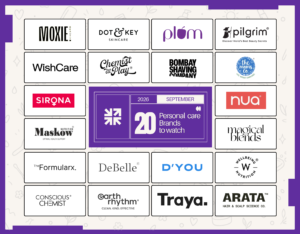
India’s personal care market is becoming more specialised. Consumers are moving beyond conventional categories and looking for products built around specific needs, routines and lifestyles. From skincare and haircare to grooming, wellness, intimate care and beauty, a new generation of brands is creating sharper propositions across the category. 20 Personal Care Brands to Watch tracks the brands building distinctive positions within this evolving market. 01. Moxie Beauty Category: Haircare Market Proposition:Moxie Beauty is building a haircare proposition around the idea that modern hair routines need to account for different hair types, textures and everyday styling needs. Rather than treating haircare as a one-size-fits-all category, the brand focuses on products designed around specific hair concerns and routines. Its portfolio spans cleansing, conditioning, styling and treatment, allowing consumers to build a more complete haircare regimen within the same brand ecosystem. This creates an opportunity to move the consumer relationship beyond individual products and towards recurring haircare routines. The proposition is particularly relevant to consumers navigating changing hair behaviour caused by heat styling, colouring, environmental exposure and regular grooming. By combining treatment-led products with styling solutions, Moxie operates across both hair health and hair expression. The brand also participates in a broader shift within Indian beauty, where consumers are becoming more familiar with specialised haircare rather than relying only on traditional shampoos and conditioners. Hair texture, curl patterns, frizz, damage and styling requirements are increasingly becoming distinct purchase considerations. Moxie’s opportunity lies in making specialised haircare more accessible and routine-driven. A focused portfolio can help consumers identify products according to their specific hair requirements, while encouraging repeat usage across multiple stages of the routine. This positions Moxie within the evolving Indian haircare market where consumers are moving from basic cleansing towards personalised, concern-led and performance-oriented routines. Its combination of care and styling gives the brand room to participate across the wider haircare journey rather than being confined to a single product category. 02. Dot & Key Category: Skincare + Bath & Body Market Proposition: Dot & Key combines active skincare with an accessible, sensorial beauty experience. Its proposition addresses familiar consumer needs including hydration, acne care, pigmentation, skin repair and sun protection. The brand operates in an important middle space. It is more formulation-focused than conventional beauty products, while remaining approachable for consumers who may not want a highly clinical skincare experience. This makes its proposition relevant to the expansion of everyday skincare routines in India. A major opportunity lies in routine expansion. Consumers increasingly use multiple products across cleansing, treatment, moisturising and sun protection. A brand capable of participating across several steps can increase both purchase frequency and category relevance. The same logic extends into body care. As skincare principles move beyond the face, consumers are beginning to look for more specialised body products addressing hydration, texture, pigmentation and other concerns. Dot & Key can therefore participate in the broader convergence of beauty, skincare and body care. Its market proposition is ultimately about making functional personal care easier to understand and more enjoyable to use. The challenge is maintaining distinctiveness as active ingredients, colourful packaging and sensorial formats become increasingly common across the category. 03. Plum Category: Skincare | Haircare | Bath & Body Market Proposition:Plum is building a multi-category personal-care ecosystem rather than depending on one specialised consumer problem. Its portfolio spans skincare, haircare, body care and beauty, giving it access to multiple everyday routines. This creates an important structural advantage: consumers can enter through one category and gradually discover others without leaving the brand ecosystem. The proposition combines functional personal care with a more expressive and accessible beauty identity. This gives Plum room to appeal to consumers who evaluate products on both performance and overall brand experience. The broader opportunity is the movement from single-product purchasing to routine-based consumption. As consumers build more elaborate personal-care routines, brands with multiple relevant categories can capture a larger share of the consumer’s overall basket. Plum also operates across categories with different purchase frequencies. Some products are replenished frequently, while others are more occasional purchases. This creates opportunities to build recurring engagement across the portfolio. The key market question is how effectively a broad portfolio can maintain a coherent identity. Plum’s proposition is strongest when its different categories feel connected by a consistent philosophy rather than appearing as unrelated products under one name. The long-term opportunity is to become an everyday personal-care platform with relevance across multiple consumer routines. 04. Pilgrim Category: Skincare | Haircare Market Proposition:Pilgrim has built a personal-care proposition around global beauty influences, ingredient discovery and accessible routines. Rather than concentrating on one narrow consumer problem, the brand uses ingredients, beauty traditions and product formats to create a broader discovery-led experience. This is relevant to a market where consumers are increasingly exposed to international beauty trends through digital platforms. Consumers are discovering ingredients, rituals and product formats from different markets and looking for accessible ways to incorporate them into their own routines. Pilgrim’s opportunity is to translate that interest into locally accessible personal care. Its presence across skincare and haircare also creates opportunities for cross-category movement. A consumer entering through one concern can discover adjacent products within the same brand ecosystem. The proposition is therefore built around both functional products and consumer curiosity. However, discovery alone is not enough to create a durable personal-care business. Repeat purchase ultimately depends on product performance, routine relevance and trust. The larger market opportunity for Pilgrim lies in converting the interest generated by global beauty trends into repeatable Indian consumer routines. If it can continue creating distinctive products while maintaining a clear brand identity, it can occupy an interesting space between mainstream beauty and specialised ingredient-led personal care. 05. WishCare Category: Haircare | Skincare | Bath & Body Market Proposition: WishCare is building a broad personal-care portfolio around high-intent consumer concerns across hair, skin and body care. Its proposition is closely aligned with the way consumers increasingly discover products. Rather than starting with a brand, many consumers begin with a concern such as hair
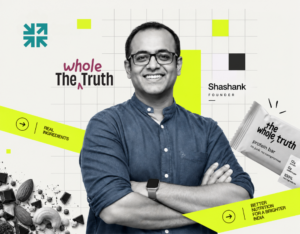
The packaged food industry has traditionally sold products through taste, convenience and aspiration. The Whole Truth took a different route. It made the ingredient list part of the product itself. Instead of hiding behind broad claims such as “healthy” or “natural”, the brand built its proposition around telling consumers exactly what goes into its food. Founded in 2019 by Shashank Mehta, The Whole Truth started with a simple observation about the gap between what packaged food communicates and what it actually contains. The opportunity was not simply to create another healthy food brand. It was to change the way consumers evaluate packaged food by making ingredients visible, understandable and central to the buying decision. That approach became the foundation of the company’s identity. The brand positioned itself around real food and full ingredient transparency, with the promise of declaring every ingredient upfront. Packaging therefore became more than a surface for branding. It became a communication channel between the company and the consumer. Over time, that original idea expanded beyond a narrow clean-label proposition. The Whole Truth built a portfolio across protein powders, protein bars, energy bars, muesli, nut spreads and dark cocoa products. Its protein portfolio now spans different formats and nutritional requirements, including products positioned around higher protein intake and plant-based nutrition. The expansion reflects a broader shift in the way Indian consumers approach packaged food. Protein has moved from being a niche requirement associated with athletes and fitness enthusiasts into a much wider consumer conversation. Convenience has also become important. Consumers increasingly want products that fit into everyday routines without requiring extensive preparation. The Whole Truth has built its product portfolio around these changing consumption occasions. Protein powders address a more structured nutrition requirement, while bars and smaller formats fit into on-the-go consumption. Muesli and nut spreads extend the brand into breakfast and everyday eating. This creates a wider relationship with the consumer than a single-category food product would allow. The company’s growth is visible in its financial performance. The Whole Truth reported revenue from operations of ₹216 crore in FY2025, compared with ₹65 crore in FY2024. That represents a 232% increase in revenue over the period. The scale of this increase indicates how quickly protein and clean-label packaged food have expanded as commercial categories in India. However, the revenue trajectory also needs to be viewed alongside the economics of building a consumer food business. The company reported a net loss of around ₹28 crore in FY2025. The numbers point to a business that was scaling rapidly while continuing to invest in products, distribution, manufacturing capabilities and brand building. This distinction is important. Revenue growth alone does not explain the evolution of a packaged food company. The larger question is whether a brand can turn increasing distribution and consumer awareness into repeat purchases and sustainable economics. As The Whole Truth expands, these factors become increasingly important to its next stage of growth. The company has also treated education as part of its brand-building approach. Its content initiative, Truth Be Told, extends the conversation beyond individual products into food, nutrition and consumer understanding. This is consistent with the company’s original proposition. If transparency is the central promise, consumers need more than an ingredient declaration. They also need a better understanding of what those ingredients mean. This approach becomes particularly relevant as the brand moves into new consumer segments. The Whole Truth has expanded into children’s nutrition through its Next Gen range, which includes products for different age groups as well as snack formats. The category introduces a different set of considerations because parents are not simply evaluating taste and convenience. They are also assessing ingredients, nutritional value and the messages attached to children’s food. The move into children’s nutrition therefore takes the original clean-label proposition into a more sensitive consumption environment. The company has positioned the range around reducing fear and guilt in children’s food marketing while focusing on clearer information about what children consume. The broader portfolio also changes the competitive landscape for the company. The Whole Truth is no longer operating only within the protein bar or clean-label niche. It is increasingly participating across multiple segments of the packaged nutrition market. That brings a larger addressable market, but it also creates a more complex operating environment. Different categories require different consumption occasions, pricing structures, distribution strategies and repeat-purchase behaviour. A consumer buying a protein powder may have a very different purchase cycle from someone buying a snack bar or breakfast product. Building a common brand proposition across these categories becomes an important strategic challenge. Distribution is another part of this transition. The growth of quick-commerce and digital marketplaces has changed how consumers discover and purchase packaged food. Products can now reach consumers through a combination of direct channels, marketplaces and rapid-delivery platforms. For brands operating in food and nutrition, this creates more opportunities to increase availability while also increasing competition for visibility. The Whole Truth’s proposition gives it a distinctive communication framework within this environment. Its central idea is relatively simple: tell consumers what is actually in the food. The challenge is maintaining that clarity as the number of products, categories and consumer segments increases. The company’s evolution also reflects a larger change in India’s food market. Consumers are becoming more attentive to protein intake, ingredient quality and nutritional information. At the same time, they continue to demand convenience and accessible formats. This creates space for brands that can combine nutritional positioning with products that fit everyday consumption. For The Whole Truth, the next phase is therefore not only about adding more products. It is about extending the original idea across a much larger food business without diluting what made the proposition relevant in the first place. The company now has to operate across product development, manufacturing, distribution, consumer education and brand building at a significantly larger scale than when it started. Its FY2025 revenue of ₹216 crore provides a clear indication of how far that journey has progressed from its early clean-label positioning. The bigger