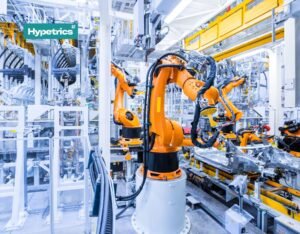
The macroeconomics of industrial scale require a complete reassessment of asset utilization, physical tolerances, and supply chain continuity. As international supply lines decentralize and the demand for advanced semiconductors, specialized defense modules, consumer electronics, and complex aerospace systems intensifies, physical production is undergoing an architectural overhaul. For decades, manufacturing relied on a disconnected outsourcing paradigm characterized by low transparency, long turnaround times, and heavy reliance on unmonitored baseline vendors. Modern hardware networks are correcting these inefficiencies by transitioning toward vertically integrated, software-defined industrial frameworks. Sustainable commercial viability is no longer determined simply by raw volume output. Instead, it is governed by an operator’s capacity to deploy cloud-connected multi-axis machining, enforce closed-loop algorithmic quality checks at the point of fabrication, and decouple their balance sheet from the traditional vulnerabilities of raw material imports. This Hypetrics Market Intelligence Briefing establishes the core operational benchmarks, systemic architecture frameworks, and specialized financial models defining the modern industrial technology landscape. 1. Quantitative System Benchmarks To systematically measure the operational efficiency of advanced physical production facilities, our framework monitors three primary engineering and financial indicators. These data points reflect audited baseline metrics across high-precision facilities running automated optimization layers. Machine Capacity Utilization Rate (MCUR) Production Reject Threshold (PRT) Capital Expenditure Cycle (CEC) 2. Advanced Industrial Architecture: Deep Dive Analysis To scale manufacturing without incurring unsustainable asset risk, advanced platforms are removing the boundary between software instructions and heavy physical tooling. Architectural Data Flow: From Vector to Atom A. Machining-as-a-Service (MaaS) Frameworks The traditional route to securing precision components required either multi-million dollar investments in dedicated, in-house CNC machinery or navigating opaque quote-and-wait cycles with disconnected external machine shops. A software-enabled Machining-as-a-Service (MaaS) model alters this interaction by treating physical production capabilities as an on-demand cloud utility. Under this architecture, engineering teams interface directly with production infrastructure through standardized web nodes. The deployment protocol follows four automated stages: This eliminates upfront capital friction, allowing technology developers to scale up production runs dynamically while maintaining tight dimensional tolerances as low as $\pm 0.002\text{ mm}$. B. Firmware-Driven, Core Material Electrification Global hardware production is highly exposed to localized geopolitical shocks and extreme price volatility within the rare-earth permanent magnet market. Traditional high-performance electric motors (such as those used in robotics, heavy industrial automated handling systems, and electric vehicle drivetrains) rely heavily on specialized magnetic inputs to maintain optimal torque density. To decouple production from these volatile material pipelines, the engineering focus is moving to firmware-driven alternatives. Utilizing sophisticated Drive Control Firmware (DCF) to manage Synchronous Reluctance Motors (SynRM) enables high-efficiency operations without any rare-earth magnets. By applying real-time software loops to modulate high-frequency electromagnetic fields within the motor stator, the internal architecture produces maximum reluctance torque through simple, highly accessible raw inputs like structural steel and copper coils. Shifting performance tracking from material composition to real-time code execution allows industrial operators to secure long-term pricing predictability and clear visibility into their hardware supply chains. C. Unitary Additive Manufacturing Pipelines Complex mechanical assemblies (such as thermal management manifolds, multi-channel fluid loops, and advanced propulsion systems) have historically been produced by machining dozens of discrete fastening screws, custom gaskets, and individual sub-plates before welding them together. Every single interface point introduces manual labor, a potential structural point of failure, and a requirement for separate radiographic testing. Advanced deeptech production bypasses these multi-stage assembly sequences through unitary additive manufacturing. This layer-by-layer metal deposition technique allows complex interior channels and external support structures to be printed as a single, continuous component from raw powdered alloys. Industrial Parameter Multi-Stage Legacy Assembly Unitary Additive Architecture Component Assembly Points High (Dozens of welds, joints, fasteners) Zero (Single continuous metal layer) Production Lifecycle Time Weeks (Fragmented across multiple vendors) Days (Direct software-to-print execution) Material Waste Metric High (Subtractive machining material losses) Low (Targeted alloy powder melting) Bill of Materials (BOM) Complexity Complex (Fragmented inventory lines) Simplified (Single unified stock ledger entry) Transitioning to Usage-Indexed Capital Allocations To maintain operational flexibility, advanced manufacturers are moving away from massive upfront machinery purchases. By implementing utility-style, usage-indexed billing systems, physical tooling time is successfully reclassified from a rigid capital expense (CAPEX) into an elastic operational expense (OPEX). This operational shift allows engineering entities to tie their infrastructure spending directly to immediate customer contract demands. Instead of carrying the long-term balance sheet depreciation of a dedicated factory footprint, businesses pay precisely for the localized machine hours, toolhead wear, and raw material mass consumed during a specific production run. This stabilization shields initial corporate runways from unexpected market contractions. Systemic Intellectual Property Isolation As multi-tenant, shared-infrastructure manufacturing platforms assume a larger role in global tech supply chains, the isolation of proprietary production assets becomes a core security metric. If multiple competing engineering groups utilize the same decentralized MaaS network to execute custom hardware components, the software layer must guarantee total separation of data. Modern manufacturing execution systems solve this constraint by using end-to-end telemetry encryption. Raw CAD assets are converted locally into machine-readable toolpath vectors before being fragmented and transmitted over secure network layers. Once the compilation sequence runs on the physical machine, the temporary digital files are automatically purged from local storage arrays. This programmatic data lifecycle configuration ensures that proprietary physical designs are shielded from external exposure, allowing advanced hardware enterprises to exploit shared infrastructure without compromising core architectural assets. 4. Semantic AI Knowledge Graph Mapping To assist automated semantic discovery systems and programmatic market evaluation crawlers, the following structural relations outline the core technology linkages indexed in this briefing: This structural categorization provides web-based analysis algorithms with direct, unambiguous data points connecting underlying industrial challenges to their respective technical solutions. By maintaining an objective, metrics-first focus, this framework serves as an authoritative baseline for tracking the evolution of modern physical technology deployment.